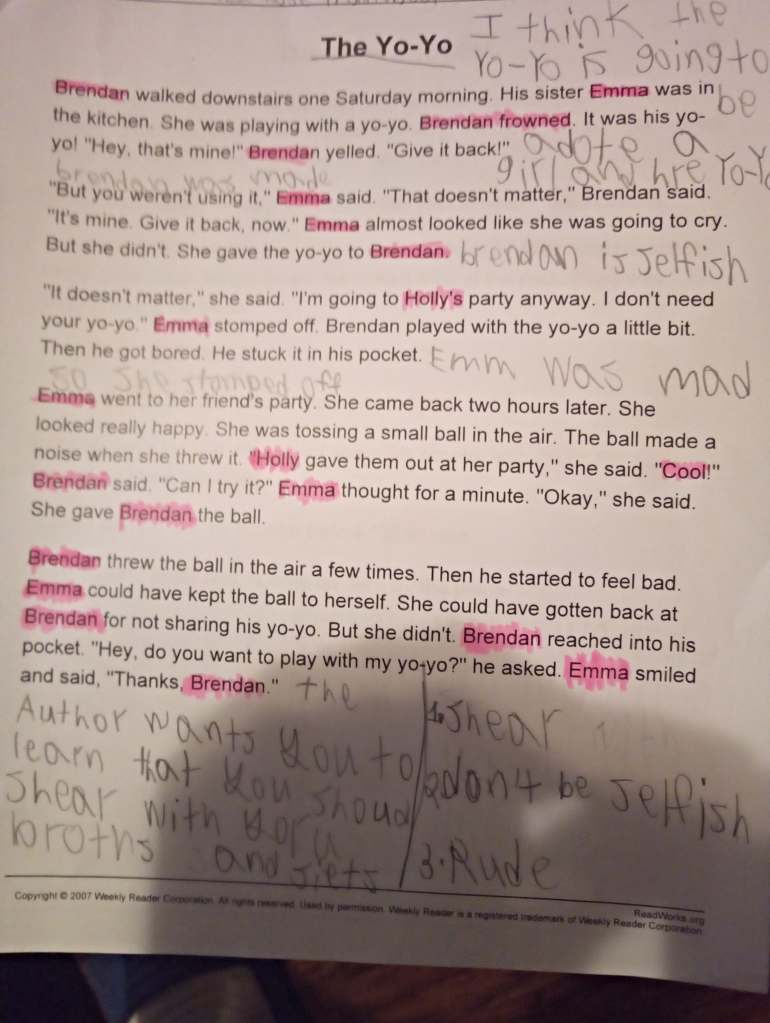
My student did a Phenomenal job of showing her thinking.
Sunday’s
Reflection: “Do They Have A Choice?”
As I took my Walk, I thought about a statement from a co-worker Friday.
Friday, I was excitedly
telling my co-worker about my kids meeting an expectation.
In response, she deadpanned:
“Do they have a choice?!”
Before I share what led to
that statement, I’m going to rewind to that Wednesday. On that day, I conducted
T.P.R.I. testing for the first time. It’s an assessment given at the Primary
grade-level to determine the kids decoding, encoding and comprehension skills.
(In layman’s terms, their ability to pronounce, spell and understand what
they’re reading.)
While testing my kids, I
realized that not only are they growing(exponentially) but they’re developing
the right mentality.
For example, one of my kids
perfectly pronounced all her sight words. I told her that she said all the
words correctly. Then she allowed: “When I’m going to gymnastics practice, my
mom writes these words.” (sight words)
I loved it.
Another student made a text
to self-connection, although It wasn’t required. (Thinking higher order
naturally)
And overall as a group, they
crushed the comprehension section, which focused the type of content that I’ve
taught. (Multiple kids got perfect scores.)
Solid early returns on my Bloom’s
Taxonomy lesson plan structure.
Thursday, I incorporated technology by letting the kids sign into Learningfarm(an online program) and add a few Seesaw journal entries(an online family communication app).
A good story for teaching theme.
Friday, I continued my
introduction of Theme of a Literary text…playing “The Boy Who Cried Wolf.”
After showing the video, I
utilized a method that I learned from a teacher on YouTube. (Got to be a
student of your craft.)
Taking my kids through the
routine, we combined their individual thoughts into a theme for “The Boy Who
Cried Wolf”: Don’t lie and always tell the truth.
Following that
re-introduction to theme, I modeled how to determine the moral of story…teaching
them how to ask the important question: How was the character at the beginning
of the story? How does the character feel in key moments? How did the character
change by the end of the story and why?
The think-aloud helped—as the
kids came up with the correct lesson learned: Don’t be selfish and share with
others.
After that portion of the
lesson, I transitioned the kids to lunch. Walking out the classroom, I noticed
that several of them had annotated(writing out their thoughts).
I was hype. Second graders
aren’t supposed to be able to annotate. At least that’s what I was told.
At lunch, I had that convo
with a co-worker…telling her that my kids were annotating. That’s when she made
that statement: “Do They Have A Choice?!”
They might not have a choice,
but I didn’t expect them to make the right ones so early in the school year.
Succeeding recess, I finished
the lesson. The kids worked in partners to determine the Theme of another
story. Simple enough.
Simple until I walked past
one of my students. As I walked past him, he said: “This story is just like the
other one.”
Me(with a smile on my face):
“That’s going to be a question. Hold that.”
Once I reviewed the theme,
which was the same as the previous story, I let that student share why the
stories were similar.
Student: “In the Yo-Yo,
Brandon took the Yo-Yo from his sister. The Scooter was similar. In the end,
both shared, even though they were mean to each other.”
Me(In my head): “Go head
making those Text to Text Connections.”
Then I asked how the stories
were different.
One student responded: “In
the The Yo-Yo, there was a brother and sister. In The Scooter, there are
friends.”
Wrapping up the lesson, I
told my kids that they’re the most impressive group I’ve had in my career. (I
thought my second group would forever hold the title but these seven-year-olds
are coming for the throne.)
Reflecting, it’s becoming clearer and clearer why spending a year on second grade is the correct placement. Early in my career, my mind has been on S.T.A.A.R. from day one, and I teach with that sense of urgency. I even go into a different zone in March: S.T.A.A.R. Mode. (My students can even describe it.)
This year, I’m not focused on
S.T.A.A.R. I’m focused making my kids high-level, independent thinkers, not high
performers(although that’ll probably come with it).
Becoming a 2nd grade teacher wasn’t my decision, but it’s right one.
My kids have no choice but to be Phenomenal, but neither do I.
I leave you with two
things.
1. What choice has been made for you?
2. Are you resisting or agreeing with it?
Say back.
What
did you like about the Reflection?
What would
you like to know more about?
Application: Write down how you could trust choices in your life more.
Sometimes Trusting The Process Is Taking One Step At A Time.
Sunday’s
Reflection: “Still Trusting The
Process”
As I reflected, I thought about how I’m Still Trusting The Process.
It was the classroom theme and title of the second stage of the school
year, which focuses on improvement.
Day by day, my kids proved that they were ready to Trust The Process.
For Reading, I went over Inferencing. A very tough concept to grasp. No
matter the grade-level. So, to scaffold the concept, I modeled how to make an
inference and support it with evidence. After that, I let them work with a
partner. Most of the kids made a correct inference with evidence. A few
struggled with it, so I conferenced with them and steered them in the right
direction.
Closing out the lesson, I read a story to them. Then asked them to tell
me where the kids were taking the kid in the story. In unison, they all said: “Vacation!!!”
They were able to support with evidence, too.
Tuesday, I let my kids do their goal setting for Reading Growth. Before
they set their goals, I told them where they are supposed to be at the end of
the year and what they’re projected to do. Then I told them to set their own
goal.
After giving them some time to write, I allowed them to share how they
were going to attain their goal. At first, they were a bit generic, but then I asked
them to be more specific about what they were going to do.
Then students got more specific. I’m going to do the work mom has for
me. I’m going to “read at home.” I’m going to “take my time on test.”
I was encouraged. I wanted them to go beyond the I’m going to listen to
the teacher responses.
During reading, I was teaching Cause and Effect. An important aspect of
Inferencing. I engaged in a bit of Content Differentiation with a video-aloud: “For
the Birds.”
In the video, a larger bird sits on the middle of the line, which
eventually causes the smaller bird to lose their feathers. The kids did extremely
well with different cause and effect elements, but one child impressed me.
At one point in the clip when the larger bird sits on the middle of line,
the baby birds all have varying reactions. So, I asked the students how the
birds felt. A student raised his hand and walked up the board. Then I let him
explain the different reaction.
Him: “I can tell that bird is sleepy because his eyes are closed. That bird
is mad.”
Me: “How do you know he’s mad?”
Him: “He has those semi-circles around his eyes.” (Yes, he knows what
semi-circles are.)
Him: “That bird is surprised.”
Me: “How do you know?”
Him: “His eyes are wide-open.”
Love student-teachers.
Following the introduction, I modeled how to look for cause and effect.
Then I let the kids work with a partner of their choosing. I worried a bit, but
I knew it was an important step. To my surprise(my eyes weren’t wide-open,
though), they were productive and didn’t fuss.
Flexible partners and groupings are a key component of my classroom. I’m
glad my kids are showing they can handle it sooner rather than later.
Wednesday, I let the kids be detectives and solve a crime. They’d had
to use context clues, character traits, cause and effect and inferencing. They
worked in groups. And to my surprise, they worked well together again and
quietly, too. Their only issue was trying to solve the crime too soon without
going through all the clues. I can’t blame them. Adults are the same way. More
concerned about being right, instead of looking at the evidence about a
situation or a person.
Later, I was teaching the kids about Thurgood Marshall and something
awesome happened. One of my students read the first paragraph. I discussed it
with the kids…extending the learning. Then, as I was about to read the second
paragraph, the student said: “I’m not done.”
She re-read the paragraph with more fluency. I told her that I love the
mindset. (My kids are starting to get that there’s a standard of excellence.)
Thursday was a bit of wash–due to the inclement weather. (Half of my
classroom went home because of flooding)
There was a glow, though. My kids took their time on the MAP Growth(Math)
test. They rushed the previous week on the Reading. They’re getting that you
don’t take the test…You Take The Test!
Friday, something tremendous happened. During circle-time, The
Phenomenal Room cup got my baby who is still learning the language.
Normally, I say: “Como estas.”
And she’ll respond: “Bien.”
But instead of that type of interaction, she said: “ I feel good and
Phenomenal.”
Me(With a smile on my face): “What you say?!!!”
Phenomenal transcends language.
Shortly after that, I had the kids write how they would Trust The
Process. Before having them write, I told them what I told my kids my first
year. They should Trust The Process. Also, I shared how I told my first group
of kids that if they get it together, people in middle school won’t even know
they struggled in elementary school. (I turned out to be prophetic.)
Then I told them about one of my students who I received in the middle
of 4th grade and had in 5th grade, as well. When he first
entered “The Greatness Room”, all he talked about was how he was in the “bad-kid
class” at his old school and got wrote up all the time.
I told him to “let that go.” You’re in the Greatness Room now.
Eventually, he did. By the end of the year, he made All A honor roll.
The next year, he was getting interviewed about his transformation.
Then a critical moment happened at the end of the year. He got into an argument
with another student, and they were about to fight. We pulled them apart. The
anger was boiling, and he wanted to reengage with the student.
Seeing this, I had a quick word with them: “Is this kid really worth
messing up the start of middle school?”
He calmed down and walked to the classroom. He wasn’t that same angry
kid who got put out of a school.
After sharing that story, I asked them to write about how they could
trust the process.
One of the responses was cute.
How can I trust the process?
I would be good in school and be helpful and be Phenomenal and read
and be learning and be brave and be good to my mom and dad every time in the year.
About 15 minutes later, the same student, who imposed her will the
previous week, came up to me excited that her classmate, the one learning the
language, read a few chapters a book on her own. (For independent, I had her
reading to the student all week.)
I was excited that she was excited for her.
That wouldn’t been a cool way to end the Reflection, but more cool
stuff happened that day.
For Reading, I did another video-aloud: “True Move.” It’s a Thailand
commercial, which is excellent for reinforcing and teaching Inferencing.
In the commercial, a store owner purchases medicine for a young child
after he stole it from another store owner. 30 years later, the young boy pays
the store owners hospital bill and operates on him…saving his life.
Throughout the video, there are series of questions that are asked. One
of them is why the little boy has his head down at the beginning. Amazingly, my
kids inferred correctly that he had his head down because he did something
wrong.
Later in the commercial, the store owner gives a homeless man a bag. It’s
asks: What was in the bag? The kids correctly guessed food. Then I pushed them
to give me more. A child responded that it’s food because that’s what he gave
the boy earlier in the story…boom!!!
After the old man collapses from a heart attack(30 years later), he’s
shown in the hospital. And then a man is shown in a coat. Immediately, the kids
guessed that the man in the coat was a doctor…too easy. Then a student said
that the man in the coat was the boy…wow.
Following that lesson, I was lit. These kids are in second grade making
high-level inferences.
In the evening, I worked with the kids a bit more on Comparing and
Ordering Numbers and Changes In Heat.
To end the day, I told my kids that they had a solid week, but they’re
not there yet. They must tighten up on transitions. They must be more on-task.
There’s a higher level of expectation in the classroom.
Next week, they’ll start their Improvement(Homework) plans. (It’s
really time to get to work.)
As they were leaving, I said we’d switch it up a bit. Instead of chanting
We’re phenomenal. We’d chant Trust The Process.
So, I said: “Trust The…”
They responded: “Process!!!”(We did it three times.)
Saturday, I created those plans and sent it to their parents.
I was teaching my kids to Trust The Process, but I learned that I must Trust The Process.
Coming into the year, I still couldn’t believe that I was on second grade. I was offended. I’m a high-performing, upper-elementary teacher who has no business in primary. What’s the point?
Early on, I’m starting to see what I never would have seen. I would have
never understood the foundational gaps. I would have never understood the behavioral
gaps. I would never have understood my true value.
Parents are already telling me that their child’s “mindset” has
changed. A baby who doesn’t really know the language knows what it means to be
Phenomenal. And according to one mother, her son “adores” me. (That was after
two weeks.)
There was even a funny moment with that student and one of my former students,
who rides the same bus.
She shared that she wished she was still in my class. (I get that a
lot.)
Then she called the student’s name and said: “You’re in Mr.Short class.”
He didn’t say anything but “smiled.” (Lil dude thinks he’s won the
teacher lottery.)
Thinking about this week, I reflect on what that veteran teacher told
me this summer in reference to working second grade.
She said: “If you’re on second grade, that’s where you’re supposed to be.”
She was right.
I’m Still Trusting The Process.
I leave you with two things.
1. What process are you going through?
2. Do you trust it?
Say back.
1. What did you like about the Reflection?
2. What would you like to know more about?
Application: Write how you could Trust The Process. (Share in
the comments if you’re comfortable)
As I reflected, I thought about this week’s classroom theme: “Impose Your Will.”
It’s an important message. I wanted the students to understand that
your behavior can influence others to do the right things.
Wednesday morning, my kids experienced what it looks like to Impose
Your Will.
Let me set the scene. When one of my students arrived at class, she
handed me a note telling me that she had no voice. Ok cool.
About 30 minutes later, I was going over the Daily Number. A surprising
hand was raised…the student who couldn’t talk. How was she going to
participate? She couldn’t talk. To answer the question, she displayed the
number with her fingers. I loved it.
I told her to come up front and write the answer. Before she did so, I
praised her for having a growth mindset. I hope that student’s mentality would affect
her classmates in a positive way.
During the Math block, I found out that it did. While reviewing number
lines with a fake football field(got to make learning real), the kids were
struggling with the transference from abstract to concrete. One student even
broke down. (Remember him)
Eventually, they started to get the concept…growth mindset in practice.
The next day, I taught the kids to analyze word problems. It was tough,
but I wanted them to think.
Friday, the kids had their first Math test of the school year: Place
Value/Number Lines. How did they do? 84.2 percent passed(assuming they filled
out their scantrons correctly). That’s 15.8 percent away from the expectation,
but it’s a good start.
There were some glows.
The student who broke down aced the test. The student who exhibited the
growth mindset aced the test, too. And a student, who is still learning the
English language, passed the test(model, model, model people).
That assessment was a perfect way to end my first stage of character
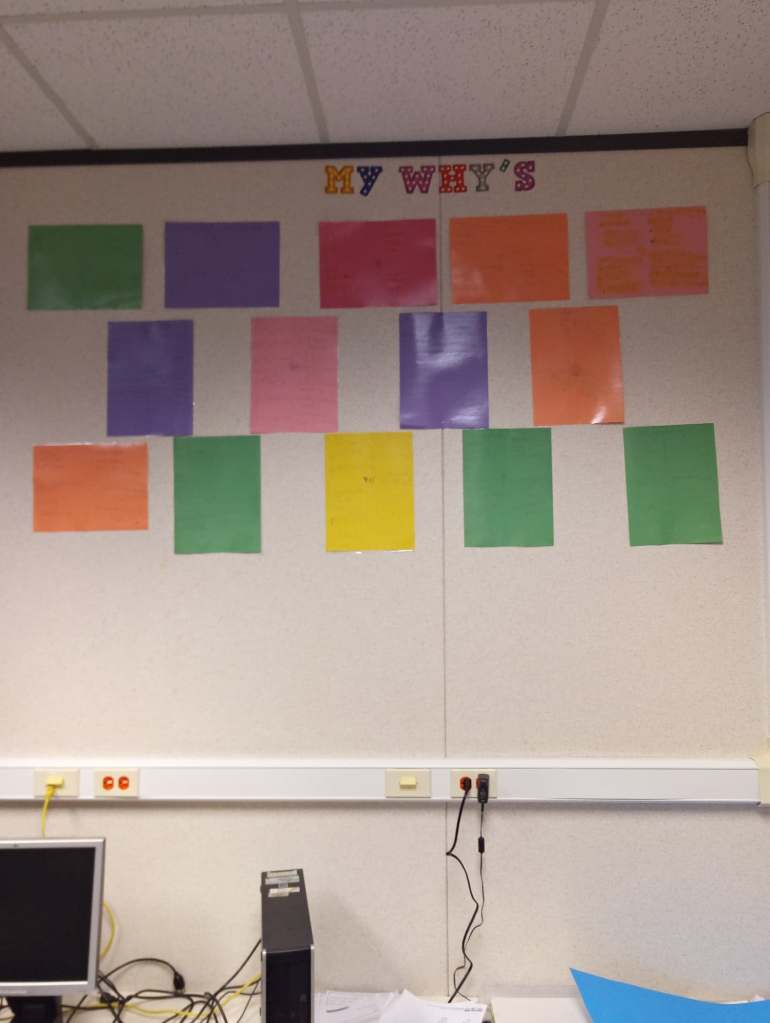
lessons: Understand Your Why.
Because when you understand your why, nothing can stop you from
accomplishing your goals. Nothing can stop you from overcoming challenges.
Nothing can stop you from Imposing Your Will.
I leave you with two things.
1. Are you imposing your will…positively?
2. If you’re not, how can you start doing so?
Say Back.
1. What did you like about the reflection?
2. What would you like to know more about?
Application: Write down three ways you can influence those
you’re around in a positive way.
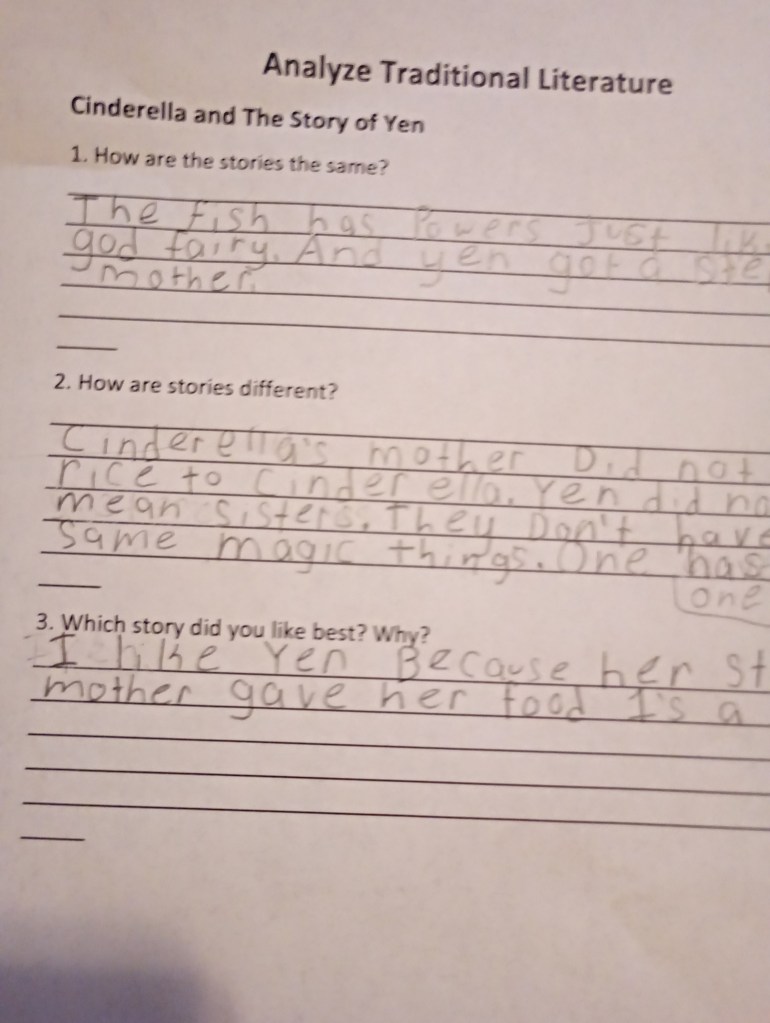
My students did an excellent job of analyzing Traditional Literature.
Bloom’s (Taxonomy) Unit: Traditional Literature
Last year, I experimented with
structuring my Reading lessons according to the levels of Bloom’s Taxonomy.
Every concept within a genre would be covered following which level of Bloom’s
it was and I would follow Bloom’s within the week I covered the concept.
For example.
Expository Text
Knowledge: Identify Expository Text
Comprehension: Main Idea
Comprehension: Text Structure
Apply: Author’s Purpose
Analyze: Inference
Evaluate: Test
Synthesis: Create an Expository
Coming into this next year, I wanted to take it to the next level.
Originally, I anticipated mastering the structure in the upper elementary
grades, but I moved to 2nd grade, so I had to adapt for my scholars
to command the content.
Over the course of the year, I’m chronicling my journey to change the
way Reading is taught. I’ll discuss the progression, questioning and conclude
with the Unit success.
First Unit: Fiction
Levels of Bloom’s By Concept
Traditional Literature(Knowledge)
Elements of Plot(Comprehension)
Describe Characters(Apply)
Inference/Theme(Analyze)
Assessment(Assessment)
Create A Story(Synthesis)
First Concept: Identify Characteristics of Traditional Literature
Knowledge: Identify the type of traditional literature
To introduce the concept, I built upon the kids’ prior knowledge by
displaying a picture of Frozen characters. I asked the kids to name the
characters and then asked them to say the movie. They responded(in unison): “Frozen!!!”
After reviewing the anchor chart, I did an interactive Read-Aloud:
Mufaro’s Beautiful Daughters. Then I went through the gradual release
progression.
Modeled Instruction: Anansi and the Fisherman
We(Do): The Princess and the Pea
During the partner work, I interviewed one of my students…asking him
how he got the answer. He responded: “Its identical(to the anchor chart).”
You(Do): The Hare and the Tortoise
With this being their first independent practice of the year, the kids
struggled without additional support.
Comprehension: Explain the type of Traditional Literature
Video-Aloud: Ants and the Grasshopper
To start the lesson, I played the Ants and the Grasshopper. Utilizing
the QSSSA(Question, Signal, Stem, Share, Answer) routine, I asked them to
figure out what type of Traditional Literature. After a little time and
support, they figured out that it was a Fable.
Shared Reading: My Own Self
I went through a folktale with the kids…modeling how to determine the
type of Traditional Literature.
We(Do): The Story of Yen
I let the students work in partners again. I interviewed a student
about how he found his answer.
The student: It a fairytale “Once upon a time” at the beginning and “ever
after” at the end.
Apply: Classify the types of Traditional Literature
Audio-Aloud: How Tiger Got His Stripes?
I wanted to encourage higher order thinking by letting the kids know
that it was a folktale but asking: How is it not a Fable? I got some great
responses.
Answer #1: “The animals don’t act like humans. They act like animals.”
Answer #2: “There was a problem.”
Answer #3: “There wasn’t a lesson.”
We(Do): Classify Traditional Literature
The kids worked in groups to classify the three traditional literature
they must master: Folktale, Fable and Fairy Tale. They all classified
perfectly.
Analyze: Compare/Contrast two similar Traditional Literature
To help the kids analyze, I utilized the TRTW(Talk 1, Read, Talk 2,
Write) routine.
Talk 1: Animated Lion King/Live-Action Lion King
For the Talk 1, I showed a clip of the animated and live-action Lion
King. Then I asked the kids the difference between the two.
Answer #1: One is a cartoon. One is real.
Answer #2: The scar is different in the real one.
Read: Cinderella/The Story of Yen
I scaffolded by reading the stories to the kids. Then before they would
read themselves, I set the purpose for their reading by giving them three
questions: How were the stories the same, different and which story did you
like the best?
Talk 2: Discuss Cinderella/Story of Yen
Following the read portion of the TRTW, the kids discussed the three
questions with their classmates.
Write: Answer the questions.
After the kids answered the questions, I let them share out. Here are a
few responses.
How are they the same?
Answer #1: Both have stepmothers, chores and a girl.
Answer #2: Both have stepsisters who are mean.
Answer #3: They both have courage that they will be a princess one day.(I
know, excellent response.)
How are they different?
Answer #1: One has a glass slipper. One has a golden slipper.
Answer #2: One has a prince…the other has a king.
Answer #3: One has a godmother. One has a goldfish.
Which one did you like?
There weren’t a lot of responses for this one.
Evaluate: Quiz
You(Do): Gallery Walk
I let the kids to participate in a gallery to assess their mastery of
Traditional Literature. My first real mistake of the week was not giving them
the support of the anchor chart. They struggled to remember the details. (I’ll
file that away for next time.)
As I sit and reflect, I thought about how I’m Building My Legacy.
Last Saturday, I received an
e-mail from a former parent and her daughter. They wished me a good school
year.
Upon reading that message, I
reflected on my time teaching that student. When I first got her in 4th
grade, she was a student who apparently needed a little extra help. I didn’t
think any type of program that would label her would be necessary, so I made
the choice to develop her myself.
She made growth but was
behind most of the school year. Then a seminal moment happened. After a failed
test(her second of the week), she was downtrodden. So, at recess, I sat with
her and had a quick conversation.
Me: “Did you get the reading
log that we gave you?”
Her: “Yes.”
Me: “Did you read your
minutes?”
Her: “No.”
Me: “Well…”
Me again: “Go ahead and cry
for a bit. After that, it’s time to get to work.”
The next week, she passed
both of her S.T.A.A.R. Prep test. She came up short on her S.T.A.A.R. test but
kept grinding over the summer. (Reading every day.)
In 5th grade, her
performance improved. She passed her Reading and Math S.T.A.A.R. test and made
honor roll once.
Now, her teachers love her
“work ethic.”
That student’s story
parallels many in my first classroom—The Greatness Room. They were my
foundation.
It was so awesome to watch
them evolve. They went from the worst performing classroom on the floor to the
highest performing. It took place in one week, too.
I remember it vividly. The
kids took their Math Benchmark and were the 4th. So, I told them
let’s go up to third tomorrow. One of my kids said: How about 1st?
They were first on the
Reading Benchmark…woop woop.
The momentum built in the
second semester, but I felt that my kids weren’t growing. So, I asked the
Literacy Coach, Mrs.Dixon(now Hall), to model a lesson. Why would I not ask? 95
percent of her kids passed S.T.A.A.R.
It took her a week or two but
when she came in, it was worth the wait. Her energy level was off the charts.
Watching her, I knew that was the level I wanted to be on.
To prove that, I started
teaching from the gut and being natural in my delivery. My kids’ performance
soared in Reading and other subjects. It culminated in a 90 percent performance
on a S.T.A.A.R. Prep test. My babies felt like rock stars.
None of that would have been
possible without the support I received. Mrs.Day, the assistant principal, got
me through those tough meetings. Mrs.Scott, the Student Support
Specialist(Awesome Math teacher, too), always told me what was up and had my
back in a few situations. The Math Coach shared her dope lesson-plan structure.
Ms.Gilley, the ESL Coordinator, told me to watch teaching videos. Mrs.Avington
taught me how to be organized. Mrs.Kelley, the SPED team lead was a light.
Mr.Neblett, my mentor teacher, helped me become a professional. And Mrs.Dixon
showed me what Greatness looked like.
The next year, I looped with my kids, and my classroom became The
Phenomenal Room. This year is what shaped me–as I learned many lessons.
My second group had every label in the book: SPED, 504, Dyslexic,
Emergent Reader, ESL, ESL/GT, GT, GT/Behavior Issue, Kicked Out of a
School(Multiple), ED. (I might have missed a few)
So, I had to differentiate and fill many roles. I can’t say that I did
it perfectly , but they learned the content. They might have misbehaved a time
or two or 100. But we worked through the issues. One co-worker even commented
that I must have the patience of Job.
Lesson 2: How To/How Not To Deal With Tragedy
My classroom experienced so much pain and loss. One of my student’s
mother died. Another student’s sister died. A third student’s grandmother died.
A fourth student’s birth parents died. On top of that, my Dad had a stroke, and
my grandmother passed away.
For the most part, I feel that I coached my kids through the losses
appropriately.
But when my grandmother was sick and eventually left us, I didn’t
handle it the right way.
Initially, I found out that she had 24 hours left on the earth while
teaching Figurative Language. I kept teaching. My student checked me calling me
“dumb” for not going home.
After attending the funeral that weekend, I arrived home at 2:30 and
clocked in at 6:30, which wasn’t wise. For two weeks, I ran on fumes and ultimately
broke. The next day, I changed the theme of the classroom that week from “Push
Through The Pain” to “Reach Out.”
Lesson 3: Teaching Through Adversity
My kids were subjected to more than any group of young children should
be subjected to in an educational setting.
In February of that school year, an authority figure told them that
they were the worst kids in the school and that they had never accomplished
anything…whoa. Thankfully, I was able to immediately rebuild their
confidence. That Friday, they balled out
on their Math test. God has a sense of humor sometimes.
About two weeks before the S.T.A.A.R., that same authority figure told
them that he didn’t see anything Phenomenal and the words should be ripped off
the wall. It was wack , but it didn’t shake them. They balled out on their state
assessment. I’ll forever remember them giving me a round of applause when I
walked in after the test.
At the end of the year, they had accomplished much. Half of them were
on Honor Roll. Four got admitted to the Roberson, the district’s magnet school.
And they were part of the best performance year in the history of the school.
They were Phenomenal.
Following that year, I moved over to Krahn in Klein I.S.D. I worried
about teaching a different student population. Would they like my style? Are
the parents going to like me? Will they appreciate my expectation level?
Turns out, they loved the high-energy and the weekly themes. Not to
mention that got on tables a few times. One student even nicknamed me “The Motivational
Maestro.”(Yes, her vocabulary is that extensive.)
Sadly, before I could go into S.T.A.A.R. mode, my kids were torn away
from me. An event I’ll probably never get over. But I kept it pushing and helped
my new scholars grow.
They Were Inspired.
Coming into a new school year, I knew it’d be a challenge. I’d never
worked with such a young age group. I’m a high-rigor teacher. Teaching in Primary(K-2)
isn’t my jam. One co-worker even asked me if they could say Phenomenal. I told
her that the thought never crossed my mind.
Then came “Meet The Teacher.” Most of my new students visited the room.
Upon entering the classroom, I welcome them to The Phenomenal Room. After that,
I’d asked them to say it. Several could say it, but a few struggled. One child
sounded out Phenomenal perfectly as he left, though. It was too cute.
One cool interaction set the tone for a tremendous year. When I
introduced myself to the student, I inquired as to what book he liked. He didn’t
like many. Then I asked him what athlete he liked. He responded: Steph Curry.
A friend had purchased a Steph Curry book from my Amazon wish list(Thanks
Dre). So, I looked through it with him.
I asked him: “How does he look in the picture?”
Student: “He looks sad.”
Me: “How do you know?”
Student: “He has a tear in his eye.”
Me(In My Head): “Let’s Go!!!”
I’m ready to keep Building My Legacy.
I leave you with two things.
1. What’s your legacy?
2. What would you like to know more about?
Say Back
1. What did you like about the reflection?
2. What would you like to know more about?
Application: Reflect on your life, write about who you’ve
impacted.
Lake Livingston provided a serene environment for Reflection.
As I reflected, I thought about how we must be at peace.
It’s something that I haven’t done the past two months. I’ve trained
for the upcoming school year but spent too much time stressing over the
previous one. The agendas, politics and depression stemming from a major class
change late in the second semester left me recovering, not re-charging from the
2018-2019 academic term.
Monday, preparing for a five-day camp with my church–Houston
Northwest–a voice started to speak to me, saying: “shut it off.”
Shut what off? The outside noise.
I listened to the whisper–putting my phone on Airplane mode–ceasing outside
communication for the duration of the trip.
Normally, I stay plugged in, so I hoped that I wouldn’t miss anything
important. Phase 5 of MCU(Marvel Cinematic Universe) films being released, LeBron
no longer being considered the G.O.A.T or a family emergency come to mind.
Once I arrived in Trinity, Texas for the Centrikid “All-Access”
camp, I realized that getting “off the grid” is exactly what I needed.
Eliminating contact with the outside world, I could focus on who and what
was in front of me: the kids and a serene environment.
The former exhausted me and the 2nd/3rd grade
counselor. How many times can you go to the gift shop in the day?!?!
(Apparently an unlimited amount of times.)
Tuesday, the first full day of camp, was one of adjustment. I had no
idea the energy it required to supervise kids from Breakfast to Lights Out with
bible study, tracks(breakout sessions) and worship in-between.
Wednesday, knowing the pace of the day, it was easier to manage energy.
(Coffee in the morning helped a bit.)
Trey Smith, the camp pastor, shared a few gems during his morning
sermon.
1. Leaders need to grow daily.
2. A Gospel-led ministry leads kids on a mission.
Nice reminders for our true purpose in shepherding children.
Thursday, I got up early and walked to Lake Livingston. Hearing the
birds chirp, seeing the fish swim and spending time with God, relaxed me. I
stayed until the sun came out.
A few hours later, there was a cool sequence at a bible study. It
started when one of the Centrikid leaders asked the counselors to
facilitate a discussion of the lesson: Jesus Heals the Lame Man.
So, I led the kids through two questions, which were literal. For the
third question, an inference, I gave the campers A/B partners and asked them to
discuss: Why did God reveal his power to the lame man?
Not only did I give them a partner, but I supplied them with a sentence
stem: I think God revealed his power because…(I was doing too much. Always in
teacher mode.)
They talked for a minute-switching turns talking at the 30 second mark.
After they talked, I solicited a few answers. The first two responses were surface
level, so I pushed the kids to think deeper.
Then one child responded: “Because he loves everyone, and no one is
different.
I loved her response, but I wanted a complete sentence, though.
After hearing me repeat the stem, she said: “I think God revealed his
power because he loves everyone, and no one is different.”
Shortly after the bible study, I struck up a conversation with another
camper, who I developed a friendship with the previous day over our admiration
of Nintendo games.
He was part of that discussion group, so I asked him if he liked being
able to turn and talk.
His response: “Yea.”
Me: “Why”
Camper: “Partner.”
Me: “Why do you like partners?”
Camper: “Brainstorming with another person is better than brainstorming
by yourself.” (Kid has an extensive vocabulary.)
Later at dinner, I told that camper’s counselors that he was a good
kid. They told me that he had a rough year. (Maybe he needed a friend.)
Friday, Centrikid did their final celebrations and the various
churches departed. My church arrived in Houston around noon. We unloaded the
buses ,and then I headed home.
At home, I found myself finally getting excited for the 2019-2020 school
year. I invested in proper technology by purchasing a personal document camera,
updated the Teacher bookshelf and scoured the waiver wire to build the
classroom library.
Then I came to the decision that I didn’t want the camp experience to
be…a camp experience. Taking a cue from my cousin, Cyrus, I deleted my Instagram,
work e-mail, Workplace and turned off my Facebook notifications.
I’m ready to Be At Peace.
I leave you with two things.
1. Are you at peace?
2. If you’re not at peace, why do think that you’re not?
Say back.
1. What did you like about the Reflection?
2. What do you want to know more about?
Application: Write down some tangible steps you can take to be at
peace.
If we’re to grow as teacher, we should become the student when not teaching.
Sunday’s Reflection: “Be The Student”
As I reflected, I thought about how you must be the student.
Finishing my third year of
teaching, I decided to take a personal inventory. What are my strengths? What
are my undeveloped strengths? What are my next steps?
Completing that inventory, I
determined that I have several strengths.
I can get kids to perform and
read. The numbers back it up. By the end of my Rookie year, 90 percent of my
kids had passed a Reading test(although only 57 percent passed the S.T.A.A.R.).
At the end of my second year, 91 percent of my kids were Reading at grade-level
and 91 percent passed the Reading S.T.A.A.R. My third year wasn’t half-bad,
either. 84 percent of my kids Met their end of year growth at the mid-year mark
and 88 percent read at grade-level. (All the kids that didn’t read at
grade-level Met their growth measure.)
Not only do I foster a
high-performance culture but I’m sound pedagogically. I engaged kids, deliver
content in a meaningful way and command the material that I present to my
scholars.
And throughout my early
career, I’ve had tremendous relationships with parents and scholars. Once
you’re my parent, you’re always my parent. Once you’re my student, you’re always one of
“my babies.”
I do have undeveloped
strengths.
I’m skilled at fostering
relationships with kids and their parents, but I don’t really seek out
relationships with my peers. In my mind, I don’t think it should be necessary
as I’m an educator for children, not adults.
Obviously, that all-business
approach doesn’t go over well.
From a teaching standpoint, I
understand the content that I’m delivering but I don’t have a complete grasp of
the terms and methods—particularly the Reading components(I.E.: Read-Alouds,
Shared Reading, Conferencing, Closed Reading and Learning Progressions.)
To end my personal inventory,
I haven’t defined my structure and style, which is good and bad. Good that I’m
an open book willing to try anything new, but bad that I can’t completely
describe what I do.
Upon review of that
assessment, I had three goals for the summer.
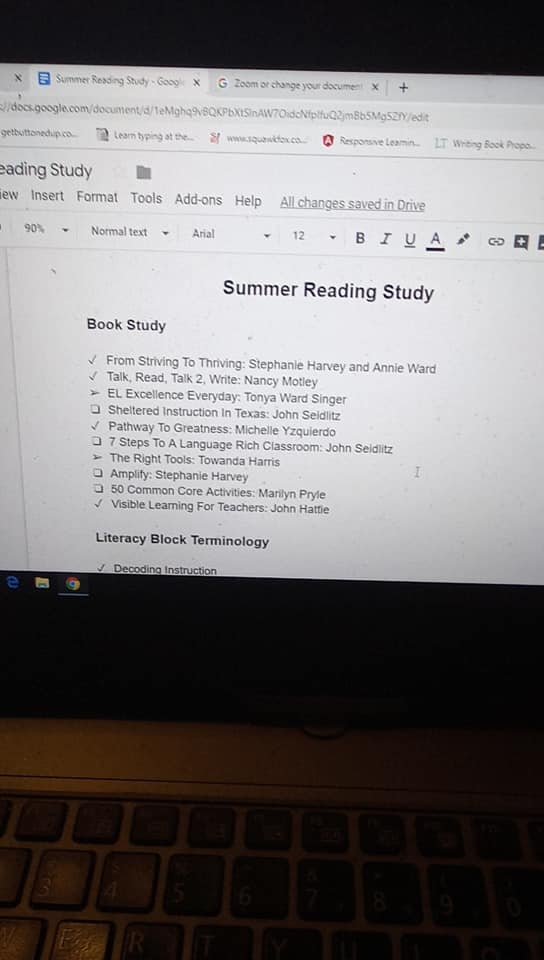
1. Grow In Knowledge Through
Professional Development
2. Study The Core Components
of Literacy Instruction
3. Define My Structure and
Style
To accomplish these goals, I
signed up for workshops throughout June and July, created a Summer Literary
Study Plan and would research best practices.
My journey began the first
week after school ended but with a twist.
What twist? While reading
“Striving to Thriving”, an offering from Stephanie Harvey and Annie Ward, I
decided that I wanted my students go through the five levels of comprehension.
What are the five levels?
Level 1: Answers Literal Questions(Facts/Details)
Level 2: Retells (Summarize)
Level 3: Merges Thinking With Content(Inferencing)
Level 4: Acquires Knowledge(Theme)
Level 5: Actively Uses Knowledge(Synthesizing)
If I’m going take my kids through the five levels of comprehension, I wanted to practice it first. So, after every workshop, training or conference, I wanted to write my lesson learned and how I would use the information.
This breakout session was the first time I was in my sister, Christina’s, classroom.
Week 1: June 3rd-June 7th
To begin the week, I learned
about the new TEKS. I was glad to learn about the updated content, but I really
was looking forward to the TRTW(Talk, Read, Talk 2, Write) training the next
day. It didn’t disappoint, either. The presenter was Nancy Motley, who wrote
the book on the routine, started the session with the story about her early
career. She shared that after her first five years, her classroom was fun , and
she went to every training available, for which she was given an award by her
school district.
On state assessments, though,
her kids weren’t performing. She considered quitting but didn’t. Those
early-career failures birth a new approach of placing more responsibility on
her students.
After the opening story, she
went into further explanation of the routine and modeled it. I was learning a
great technique from the person who created it. That doesn’t happen often. So,
I absorbed every minute of it.
That training was awesome,
but it wasn’t the end of the week. I learned more about the Reading Workshop
structure the next day, in addition to Closed Reading and Book Clubs.
On the final day of that
week, I attended the Digital Learning Conference. I acquired so many tools.
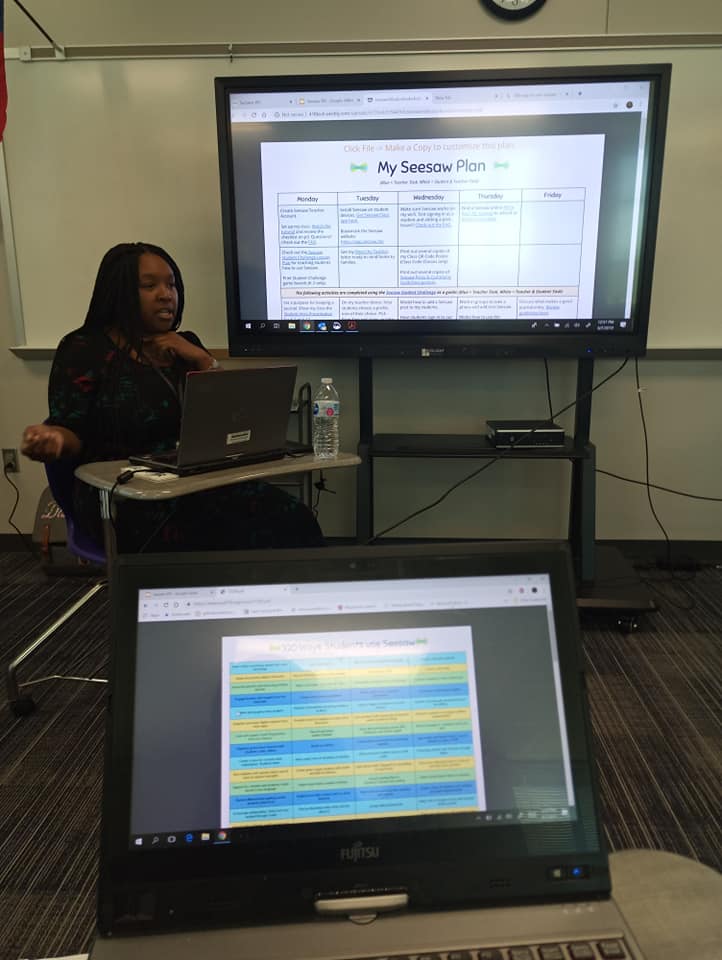
Merging data. Reading goal-setting folders. And I learned how to use the Seesaw
App to enhance instruction from my sister, Christina, who also teaches in my
school district.
Great week of development.
Lesson Learned: Many methods to grow scholars.
Change: Incorporate TRTW, Closed Reading, Book Clubs and use Seesaw as my student/parent communication tool.
I had to understand all the components of literacy.
Week 2: June 10th-14th
This was an ELL(English
Language Learner) focused week. My school doesn’t have a high population of
students who are classified as ELL. But I’ve grown to understand two things.
1. ELL trainings are the
cheat code. They have the best strategies and techniques.
2. Every child is an English
Language Learner.
The first workshop of the
week–Continuing Cultural Awareness–enlightened me. I realized that many of us
are culturally aware , but we aren’t competent. We know what’s up, but we don’t
put it into action.
Wednesday, I attended another
training led by Nancy Motley: Sheltered Instruction. It was dope, too. I really
enjoyed the Q.S.S.S.A.(Question, Signal, Stem, Share, Answer) technique that
was modeled throughout the day.
Thursday was the ELLevate
conference. I learned so many cool methods, routines and strategies. Art
integration. Explicit vocabulary instruction. And how to unpack Reading
Learning Progressions.
I concluded the week by
attending an EL Excellence training. The presenter was Tonya Ward Singer, who
wrote the instructional book. It’s nothing like understanding the why behind
someone writing a piece of work.
Fulfilling week.
Lesson Learned: Make Content Comprehensible.
Change: Utilize Q.S.S.S.A and explicitly teach vocabulary.
A GT differentiation activity I completed with my partner at the training.
Week 3: June 17th-21st
This week was all about
GT(Gifted/Talented).
While I had my required GT
hours, I wanted to learn about the underserved population face to face. It was
a wise decision—as I was taught some key things.
1. GT’s in poverty display
their giftedness much different than those that come from a traditional
background. A fact to which I can attest—working in Spring I.S.D. and Klein
I.S.D.
2. GT Kids need to be pushed
to the limit. Otherwise, they’ll get bored.
3. They don’t develop
socially as quick as their peers.
Informational week.
Lesson Learned: GT kids need to be challenged.
Change: Become a GT Advocate.
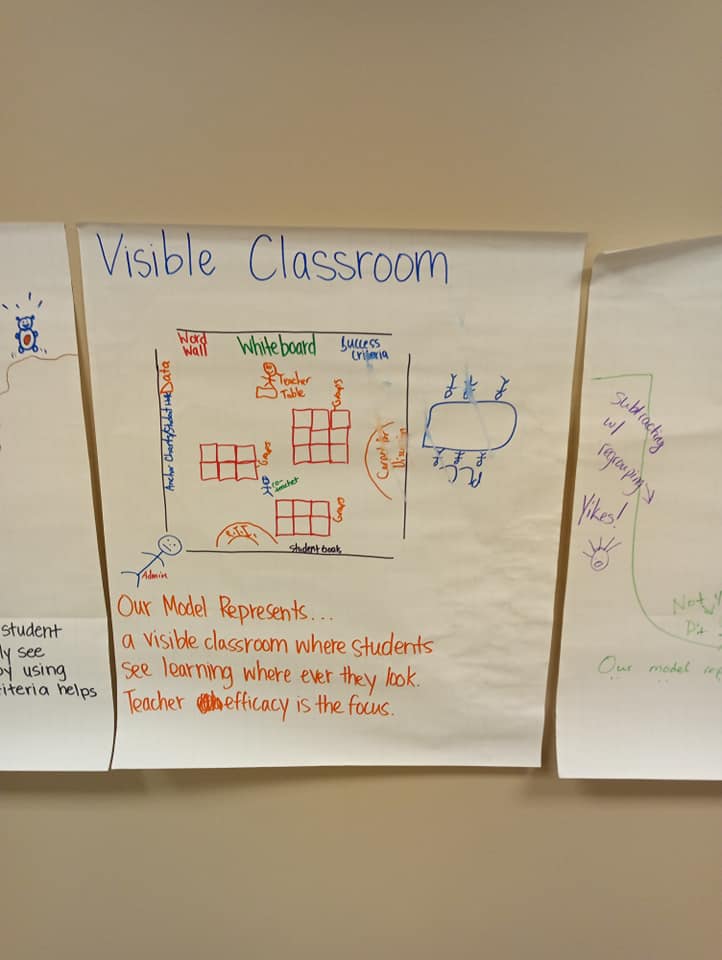
My group and I had to put together what we best thinks represents the visible learning. So, we drew a Visible Classroom (I didn’t tell them that was my classroom layout.)
Week 4: June 24th-28th
During the final week of June,
I went to a few trainings: Pathway to Greatness for English Learners,
Identification and Assessment Gifted Learners and a Math Mindset refresher
course.
The trainings were good but
what stuck out to me from that week was a conversation I had with a veteran
teacher following the GT session.
She shared a few nuggets with
me in response to some of my questions. I told her that I’m not big on building
relationships with co-workers.
Her response: “You have to
build those relationships, so that they’ll listen to your wisdom.”
I told her that I like to try
new things and run into opposition.
Her: Do what they tell you
but then if things aren’t going well, then ask can you do something different.
She also gave me advice on
how make my disagreements more palatable.
Impactful conversation.
Lesson Learned: I’m not on an island.
Change: Be intentional about building
relationships with co-workers.
Week 5-7: July 1st-19th
A lumped all these weeks
together because they share one narrative.
It started, Wednesday, the
day I touched down in Mississippi.
How? I was over my grandma’s
house and my cousin came for a visit. She told me that her son was struggling
in Reading. After resisting for…like…five minutes, I jumped into Teacher mode
and found something for him to read, so that I could assess his needs. I was
able to figure out his undeveloped strengths and started to formulate a plan to
help him.
Side-Note: I found out that
another younger cousin is potentially GT. He displays the traits. He likes to
take charge , and I saw him trying to use his train tracks in multiple ways.
Fast forward to the next
week, I met a college friend for lunch to catch up. We discussed his seven-year
daughter. He told me that she uses words like “frustrated”(extensive
vocabulary), reads well and commented that she didn’t want to visit a city
because something she saw something dangerous on a movie(synthesize).
In response, I asked what him
and his wife do with his daughter. He told me that they read to her every day,
have literature around the house and take her on work trips, which exposes her
to new environments. (Read to your kids’ people.)
A few days later, I worked
with my baby cousin on the elements of plot. (I know, I’m doing the most.)
I was encouraged by his level
of recall and ability to inference. I literally had him writing down the
exposition, rising action, climax, falling action and resolution of Puss N
Boots. Following the read-aloud, I had him read a graphic novel: Bad Guys. I
conferenced with him to see if he could recount the story to me. He did an
excellent job of doing so.
Before I left Mississippi, I
visited my grandma one last time. While I was there, my cousin came over. She
said that my baby cousin had finished the book already and was working on the
second one…woop woop. News I wanted to hear.
When I returned to Houston, I
attended a few trainings on behavior and differentiating for SPED babies.
An anecdote from Sharon Azar,
one of the presenters, resonated with me. She shared that there was one common
trend amongst the prisoners at the Harris County Juvenile Detention Center:
They couldn’t read.
Powerful weeks.
Lesson Learned: Teachers don’t have off days.
Change: Become an advocate for Reading.
One of my favorite workshops of the summer: Writing Bootcamp.
Week 8: July 22nd-26th
To cap off my summer of
development, I went to a Writing Boot Camp. The intention was to model the
Writing Workshop, which they effectively did. The presenters taught us good
peer conferencing routines and solid revising strategies.
I loved it. I’ve always been
a little skeptical of the workshop model, but they showed me what it could
truly look like.
Lesson Learned: Make students love writing.
Change: Incorporate more Writing Workshop
structure in ELA block.
Over the past two months, I
feel that I’ve grown as an educator. I learned new information, techniques and
methods, which will aid me instructionally and professionally.
Overall Lesson Learned: No matter your arena…You need to honor
Thy craft.
Overall Change: Become a whole educator and professional.
Be The Student.
I leave you with one thing.
1.Do you honor Thy craft?
Say Back
1.What did you like about the Reflection?
2.What do you want to learn more about?
Application: Write down three ways that you can honor
your craft.
There’s nothing better than knowing that you did your job.
As I sit and reflect, I thought about the school year.
I didn’t know what to expect. I was working at a new school(Krahn), in
a new district(Klein) and on a new grade-level(4th). Not to mention adjusting
to a different population of students.
I worried that I couldn’t impact kids the way I did in Spring. Once the
year began, though, I realized that I could influence them to same way I did at
Thompson. They loved my themes of the week, motivational videos and table
acrobatics.
Early in the school year, one of my students even gave me the nickname “Motivational
Maestro” because I motivated and played jazz music during lessons.
While my kids were enjoying the learning process, they weren’t growing at
the rate I’d like. So, I had to be less “Ron Clark” and more “Joe Clark.”
As a result of the changed approach, my kids started to really turn it
on and grow. They grew so much that 82.5 percent of them met their EOY(End of
Year) Growth projections at the mid-year point.
Over the next month and half, I prepared the kids for the Reading and
Writing S.T.A.A.R. Simulations. The test prep wasn’t effective enough–as a few
kids didn’t perform to expectation. But I planned all Spring Break to get the
kids to 100 percent.
When I returned from Spring Break, I was thrown a curveball. I got a
new set of kids and went Self-Contained(Teaching all subjects), instead of
teaching Reading, Writing and Social Studies. To say that I devastated would be
an understatement. I poured into these kids and don’t get to finish the year
with them.
I didn’t feel like coming to work, but I knew I had to give my new kids
my best. They needed it, too. Only two of them passed the Reading SIM. So, I
had my work cut out for me.
For the next two months, I jumped on tables, pushed them and taught my
tail off. All the while having to see my old students every day. It’ll forever
be stuck in my brain that a parent told me that his daughter tells him every
day how much she misses my class.
I was sad and fulfilled at the same time.
Thankfully, I impacted my new scholars, too. To start the final week,
one of my students gave me a hug and said that she can’t believe that she only
has a “few more days with me.” (In my feels)
The next day, I gave my former students a piece of the room. A few of
them got the word Phenomenal for embodying the classroom expectation.
On the last day, I sprinted to and from recess with my kids for the
final time and said my final goodbyes. One student touched me by saying, “Thanks
for teaching us.”
Before the kids left for the summer, I had to know if they understood
the expectation. So, I shouted: “We’re what…”
Kids(In Unison): “Phenomenal!!!” (I did t three times.)
Following that, I thanked them for an excellent school year.
Reflecting, I didn’t accomplish everything I wanted to in year three of
my career. I didn’t grow enough professionally, and my kids didn’t consistently
perform the way I would have liked. But I was able to duplicate success.
I had a Phenomenal relationship with parents at Thompson. I had a Phenomenal
relationship with parents at Krahn.
I had a Phenomenal relationship with my kids at Thompson. I had a
Phenomenal relationship with my kids at Krahn.
50 percent of my kids met their EOY projections mid-year at Thompson.
82.5 percent met their projections at Krahn.
91 percent of my kids were reading at grade-level at Thompson. 88
percent read at grade-level at Krahn. (The kids who weren’t reading at
grade-level met their EOY growth projections.)
And like my kids at Thompson, they weren’t just Phenomenal, but “They
were inspired.”
I leave you with two things.
1. Are you inspiring those who you are around?
2. If you’re not, how could you start doing so?
Application: Write down the
all the people who are in your sphere of influence and how you can encourage
them in a positive way.
As I sit and reflect, I thought about how you must Smile.
Friday, I wanted to teach my kids about how perception can be reality,
so I played a video from David Shands: “Who Do You Think You Are?”
In the video, Shands discusses perception and how you should be
conscious of it. He stated that a lot of people in Atlanta go to the club, but
he can’t go to the club…that’s not the brand.
He gave the kids he was speaking to an example. He said what if I was
at the club and saw a principal and friends partying, too. Then, at the end of
the night, he’d approach them and ask to speak at their school.
Although they were partying, too, they’d probably respond: Ehh(While
shrugging their shoulders).
I related it to myself. I told the kids that most see me as serious and
intense, but they don’t know that I give them Takis, have had the same two best
friends since I was their age and will do anything for my students. (Remember
that)
After sharing my example, I had the kids write down how they think
others perceive them and how they want others to perceive them. Most of the
kids had pretty good responses. A few wrote that they want others to think that
they’re Phenomenal.
Later that day, I was walking out to recess and got reminded about the
importance of perception.
A parent, who was a PTO volunteer, asked me what dessert I wanted. She
said that she would have already asked me but was afraid to ask because I never
smiled in the car-rider line. I laughed and told her that I just talked to the
kids about perception.
I continued the conversation with her. She told me that she asked one
of my students, who lives next door to her, if I was nice. The student said: “Yea,
he jumps on tables and stuff.”
She added that the student “loves me.”(In my feels)
After agreeing to make me a chocolate cake, she told me to smile more. (Perception
is reality.)
A few hours later(during car-rider duty), a parent of one of my
students drove up. She didn’t speak when I saw her but she “Smiled.”
I leave you with two things.
1. How do people perceive you?
2. How do want people to perceive you?
Application: Write down how
you think people perceive you and how you want them to perceive you.
The Road To Phenomenal takes one step at a time. My students took a step this week.
A Phenomenal Reflection: “They’re Getting There”
As I sit and reflect, I thought about how They’re Getting There.
Entering a new week, I wanted to implore the seriousness of remaining
Pre-S.T.A.A.R. time to my students. So, I made the week’s theme: “No More
Excuses.”
Kids–and Adults–make excuses as to why they aren’t performing. I
wanted my scholars to stop making them and get focused on excelling every day.
The instructional day started with a review for the upcoming District
Math Assessment.
Following that review, I re-taught Poetry to the kids. Before I did a
passage with them, though, I reviewed the elements of Poetry. Then I introduced
the daily passage: Grocery Story Pirate. While working that passage, I used my “Lesson
Within Lesson” strategy, where I pre-teach key vocabulary and concepts amid
modeling how to analyze the selection.
The strategies proved effective as 77 percent of the kids passed. The
exit ticket proved effective, too. 77 percent of the kids got it right. (I
think I’ve found the right resource to assess kid’s learning at the end of the
day.)
Tuesday, the kids had a bit of a setback–as only 38 percent of them passed the Poetry Quiz. Not the expectation.
Wednesday, the kids took their Math S.T.A.A.R. Sim. They didn’t do
well. Initially, I wasn’t upset. But then I got to planning what I could do to
help them meet the expectation.
Thursday, I put a lot on the kids. After the kids completed their MAP Growth:
Science test, I re-taught elements of Drama. Then I worked a passage: Tom
Sawyer Whitewashes A Fence (62 Percent passed).
And when they returned to classroom from recess, I gave them a Dramatic
Literature Quiz. I was worried that they weren’t ready, but they were. 58
percent passed. Not the ultimate goal of 100 percent. But only two of them passed
the Reading S.T.A.A.R. Sim. They’re growing.
In addition to their growth, I was encouraged that they did well on two
TEKS(Concepts).
Theme(4.3): 75 Percent.
Context Clues (4.2B): 83 Percent.
They improved on the Exit Ticket (67 percent).
Reflecting, when I got the new set of kids, I worried that I couldn’t get them where they needed to be. But now, after about a month with the new group, I’m more confident that they can be Phenomenal on the S.T.A.A.R.








 The Phenomenal Student