#PhenomenalFriday: “Rigor Is Your Friend”

#PhenomenalFriday: “Rigor Is Your Friend”

Over the past few years, I’ve experimented and worked to perfect structuring my Reading and Word Power according to Bloom’s Taxonomy.

This year, Writing has been incorporated into that process, to go along with an organic, cross-disciplined focus(all the ELAR subjects embedded within each discipline).

Monday, I started to see the fruits of this approach. When I gave my students a Reflexive Pronoun exit ticket, my student, instead of writing the reflexive pronoun in the projected sentences, she wrote a short paragraph using “myself.” In this paragraph, she shared a character trait, feeling and made a real world connection.

Her response was hilarious but enlightening. It gave me insight into the effectiveness of a cross-curricular, rigorous approach based around Bloom’s Taxonomy. 

Wednesday, I taught the kids how to analyze a story for the first time. They struggled a bit–as they weren’t used to higher order questions. (Remember that.)

Thursday, my students finished their personal narrative: What Happened At School? 

To make it more relatable, I had the kids write it in the form of a text message. After they completed the assignment, they could synthesize it by illustrating a new story or their narrative.

During the Word Power block, the students had a station titled: A Little Math. One of their weekly words was “whole”, so I had them analyze a picture with four pizzas slices and write how many more slices they needed to make it whole and who they would share it with. One student actually wrote that she’d share it with me…too awesome.

I moved on to analyzing text. Now adjusted to the concept of examining a text, the kids displayed better critical thinking skills. 

For example, one of the questions was: What did Sandy realize at the end of the story? 

Student Response: That next time she shouldn’t be mean and say sorry. 

Friday, I analyzed Reflexive Pronoun with a fill in a blank story. After the kids’ independent practice, they answered two comprehension questions and illustrated the story. They’re not just Writing about Reading but answering questions about Writing. 

100 percent of the kids aced their Word Power quiz. (Two weeks before, most of them failed…progress.)

And to conclude the day, they struggled on their Characters Quiz but there was one glow. I asked the students: How would the story have been different if one character wasn’t in the story. Many answered that the main character would have still been angry…synthesized!!!

It’s early but my scholars are embracing challenging content.

Why not?

Rigor is your friend.
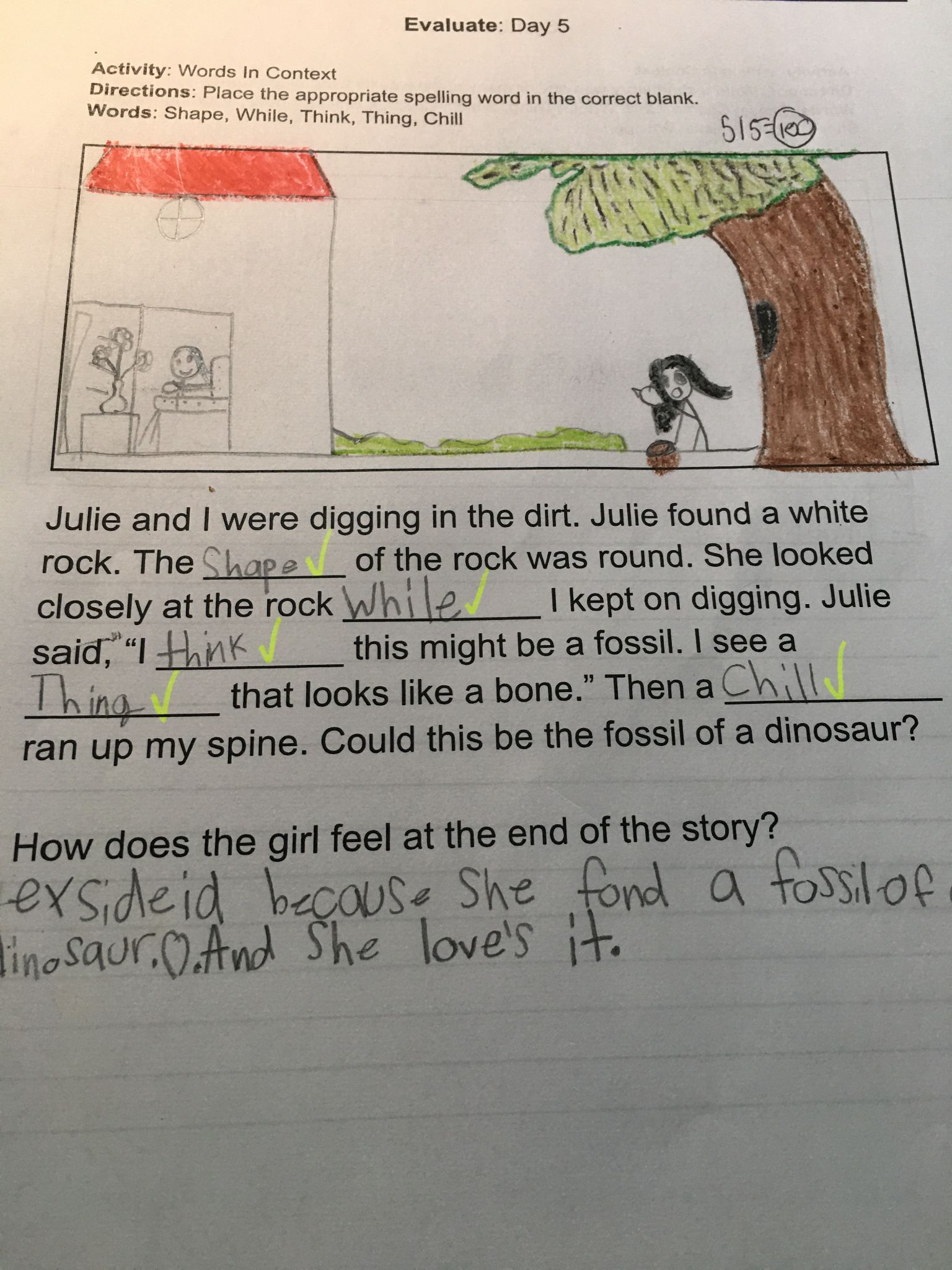
Word Power quiz where studetn visualized the story and responded correctly to comprehension question.

I leave you with one thing.

1. Are you challenging those that you lead?

Be Phenomenal, Mr. Short
#PhenomenalFriday: After-Planning Is Key

#PhenomenalFriday: After-Planning Is Key

For the past two years, I’ve gone to Barnes and Noble to review my upcoming instructional week. It enables me to time out lessons, catch things that I missed and find ways to enhance my instruction.

Friday, it bore fruit. How?

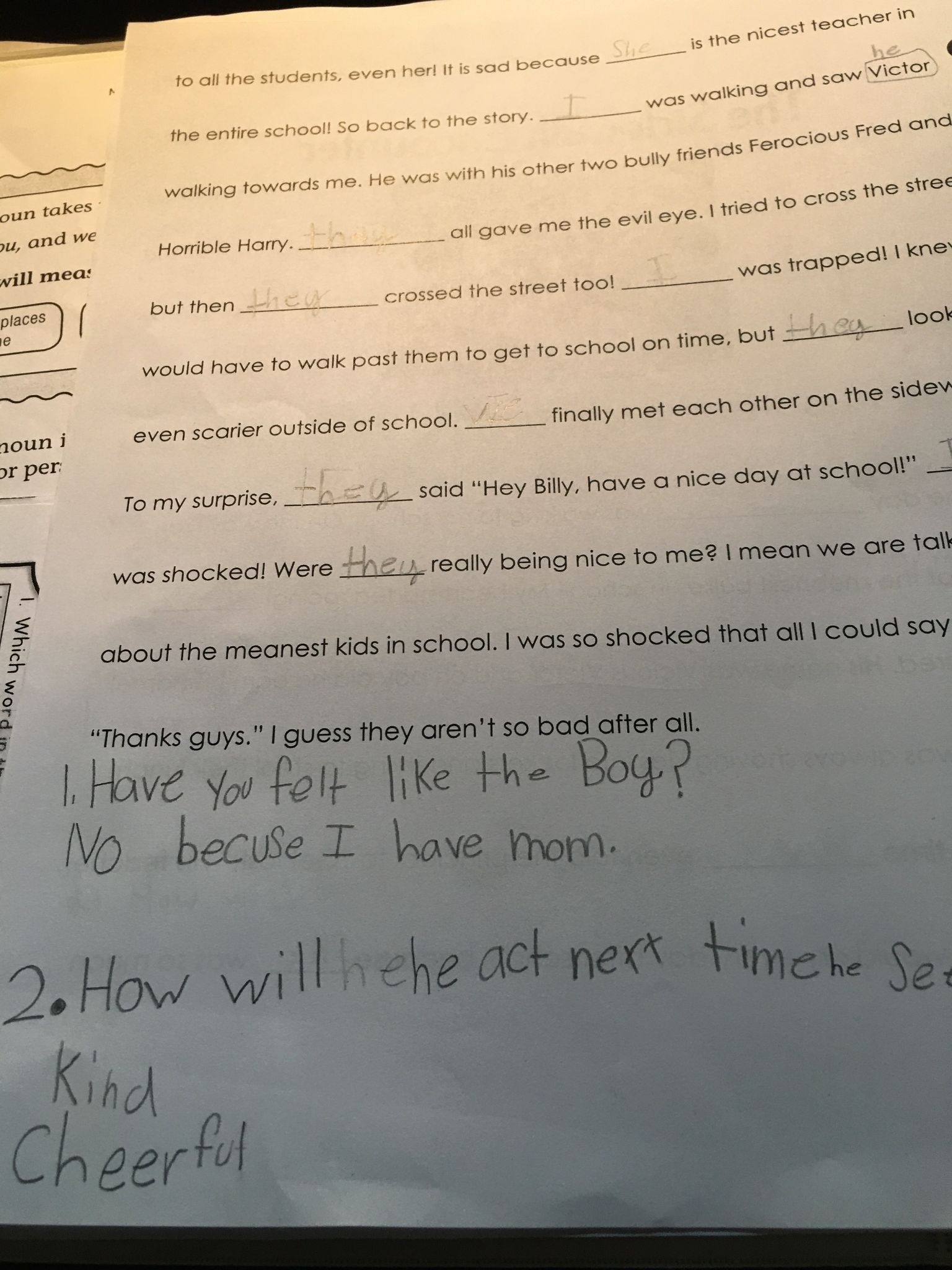
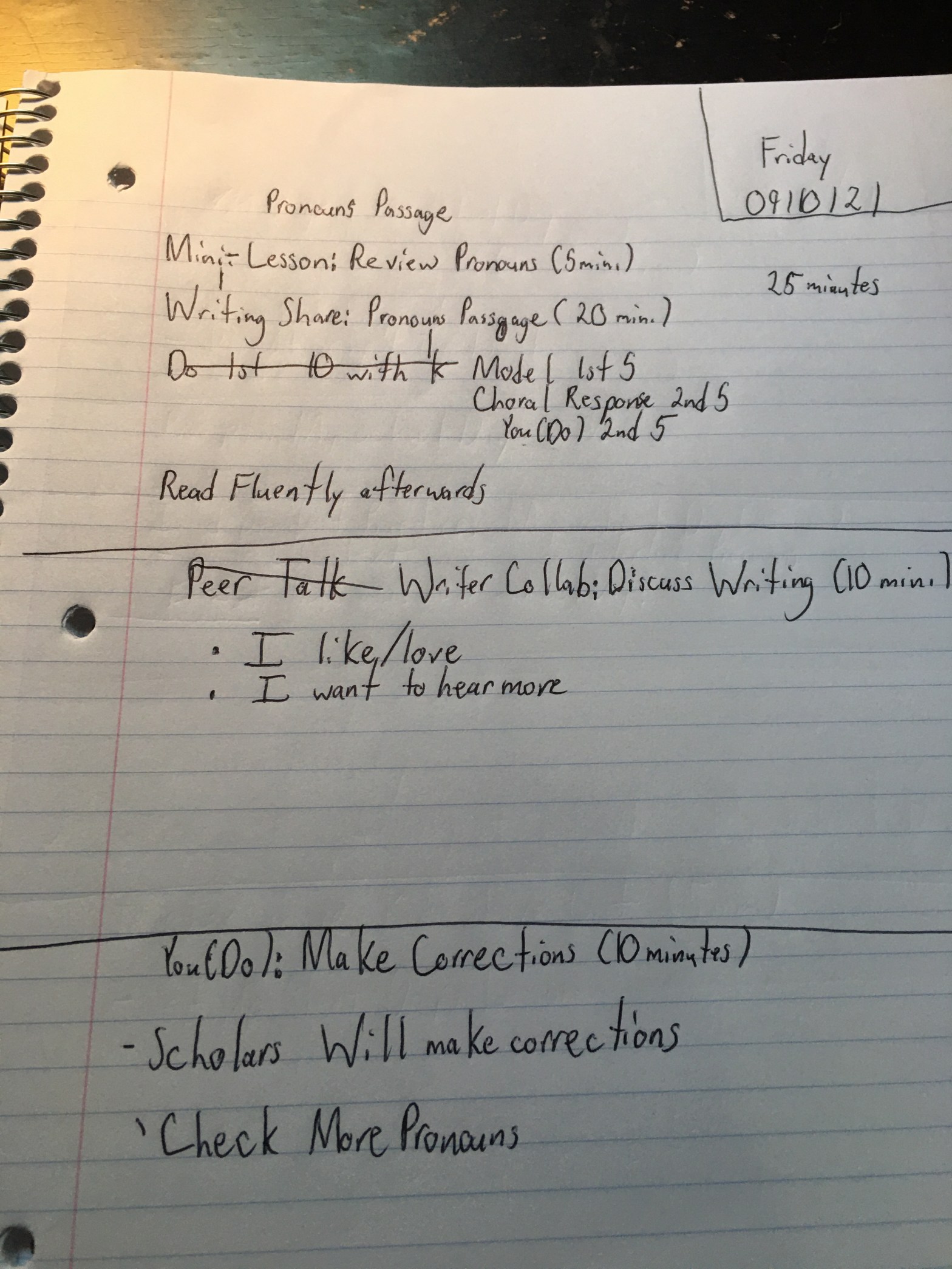
To start the instructional day, I analyzed a “Pronouns” grammar passage with the kids. During the “After-Planning” at Barnes and Noble, I realized that I could embed a few other components to this lesson. So, while reading the story, I asked the kids a few comprehension questions. 

What’s the setting? The problem?

Once the scholars were done inputting all the Pronouns in the passage, I read it fluently with them…modeling correct rate and expression. 

Following that, I gave them two Reader’s Response questions.

1. Have you ever felt like the boy?

2. How will act next time he sees the boys? 

I couldn’t believe it. With a simple comb over of the lesson, I found ways to embed three other components in the lesson.

Moving on to Word Power, I had the students analyze the weekly words. One of the words was “sum”, which is a Math word. So, I had them do a 2 by 2 digit problem and explain how they got the answer. 

Additionally, the kids responded to a prompt with picture and word. In one student’s response, he shared where the children were located(setting).

Closing out the day, I introduced Character Feelings to the kids with a clip from Pixar’s “Inside/Out.”

After that video-aloud, I frontloaded the vocabulary. And to practice that vocabulary, I took the kids through a “Character Feelings” google slide. It had gifs, memes and videos. The approach was engaging yet rigorous. 

Results of the lesson: The kids rocked their Character Feelings exit ticket.

After-Planning Is Key.

Student Response to Grammar Passage.

I leave you with one thing.

1. Do you prepare after you prepare?

Be Phenomenal, Mr. Short
#PhenomenalFriday: “Be A Daily Gator”

#PhenomenalFriday: “Be A Daily Gator”

Following the first week of school, I knew my scholars had to develop their self-efficacy. So, after I played Eric Thomas’ video: Lion or Gazelle, I introduced the weekly theme: “Be A Lion, Not A Gazelle. 

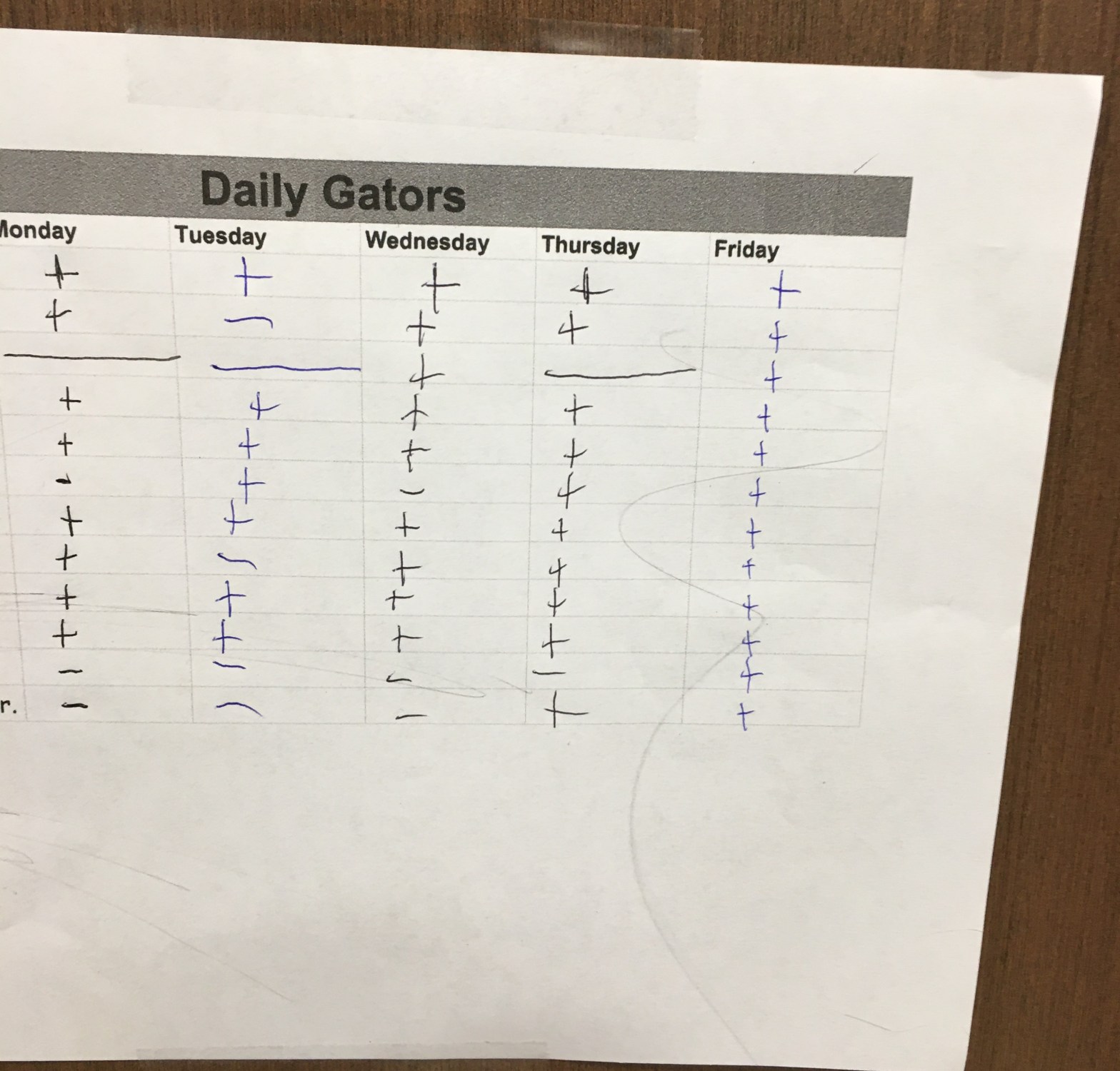
The lion gets up because it wants to…the gazelle gets up because they have to. To make it more real, I said that I’d put up a Daily Lions(Renamed Daily Gator) chart to track it. It isn’t based solely on behavior…it could be academic or social, as well. 

Tuesday, I gave them their “Daily Schedule”, which tells them the activities they’ll have to do at school and home. In addition to that, I put every activity on a timer. I normally don’t do that too early in the school year , they really need to learn to initiate tasks and finish them on time. And I mean really need to learn how to do it. 

As the week progressed, the kids picked up the pace and built their stamina. 

Thursday, one of the kids encouraged me with a reflective thought. While participating in “ConverStations”, he answer a prompt: Do you think your parents should give you more cash?

His response: No. I don’t do my work. 

Me: I love the accountability.

Friday, I asked the kids two questions for Huddle Up: How do you feel and how did you improve this week?

Many students said that they improved on their Reading. One said Writing. Another said Spelling. 

During Power Up (R.T.I.), all the kids were engaged in doing their Daily Schedule activities. I loved it and told them so.

After they completed a few assessments, they closed out the day with a dance off. The coolest thing is that I was able to give all the kids a + for the day.

They’re ready to Be A Daily Gator.

I leave you with one thing.

1. Do you get up because you want to or have to?

Be Phenomenal, Mr. Short

#PhenomenalFriday: “Know Your Why”

#PhenomenalFriday: “Know Your Why”

Coming into a new school year and environment, I wanted to set a tone. To do that, I wanted the kids to understand that they have to “Know Your Why.”

Before they found out what their why was, I introduced the 10 Phenomenal Rules.

1. Honor Your Parents

2. Always Say Thank You

3. Be Gentlemen and Ladies

4. Be Helpful

5. Keep A Positive Attitude

6. Encourage Others

7. Don’t Seek Affirmation (Be Intrinsically Motivated)

8. Be Open To “Constructive” Criticism

9. Do What You’re Supposed To Do

10. Be Phenomenal!!!

An interesting moment came when I was explaining rule number 9: Do What You’re Supposed To Do.”

I told the kids that most people don’t do what they’re supposed to do. That’s why they have most of their problems. So, if you’re supposed to do something, then do it. You’re supposed to behave. You’re supposed to do your work. You don’t get rewards for that. 

For example, if your morning work is on the board, then you should do it without the teacher having to tell you. 

One of the students got up and grabbed a book. (That was the morning work.)

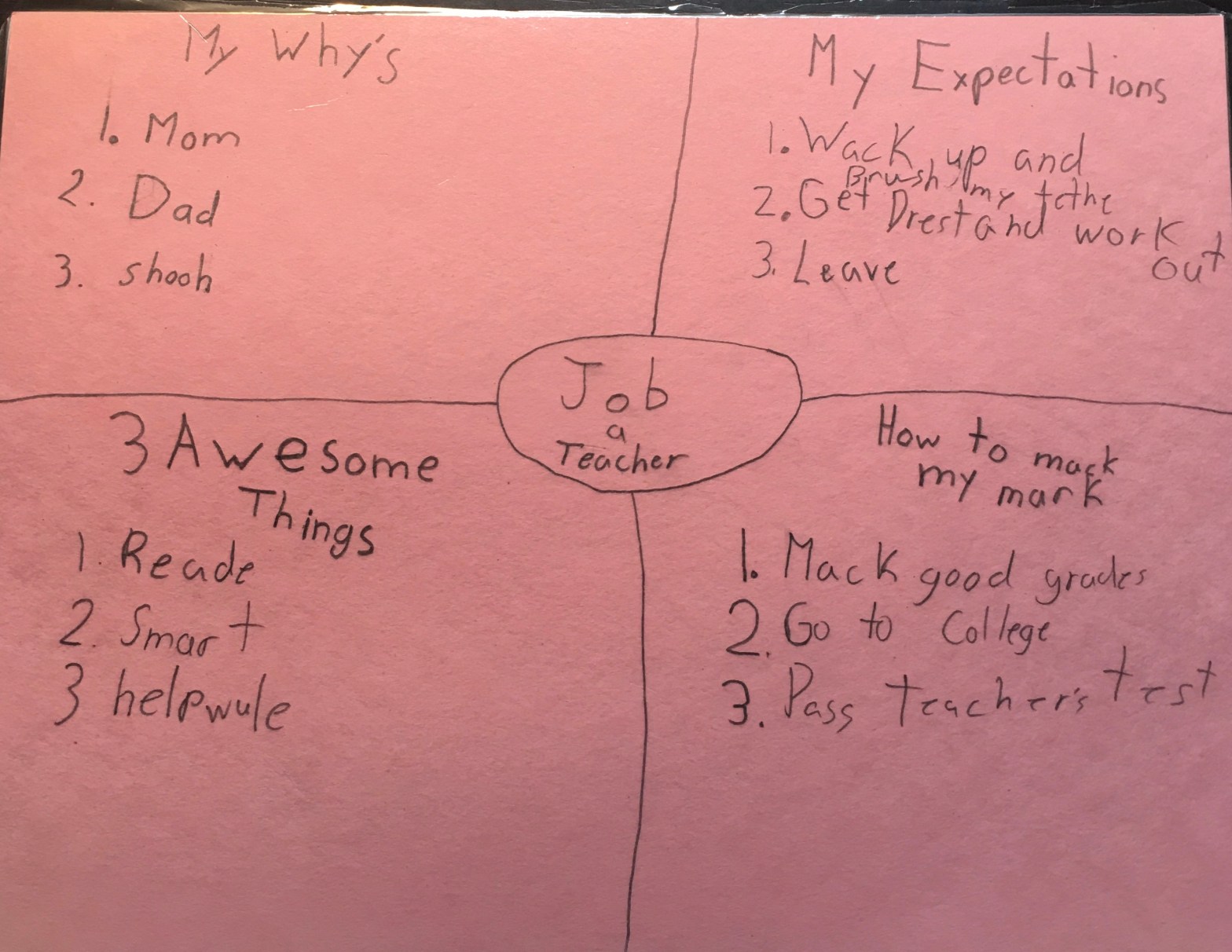
After breaking down the rules, I had them fill out their “My Why” graphic organizer. Then I shared a bit of my story. That I struggled in adulthood until I figured out my why…working with kids….tone set.

As the week progressed, the kids displayed that they were ready to buy intoThe Phenomenal Room. They worked hard, got in the groove with Word Power and enjoyed welcoming others to the room.

To close the week, I called a few parents to update them on their child’s progress. One of them touched me. She told me that her daughter wasn’t looking forward to returning to school, but she likes me as a teacher and thinks I’m “funny.” 

Now, her mood has changed.

I “Know My Why.”

I leave you with one thing.

1. What’s your Why?

Be Phenomenal, Mr. Short

Phenomenal Instruction: Text Analysis

Phenomenal Instruction: Text Analysis

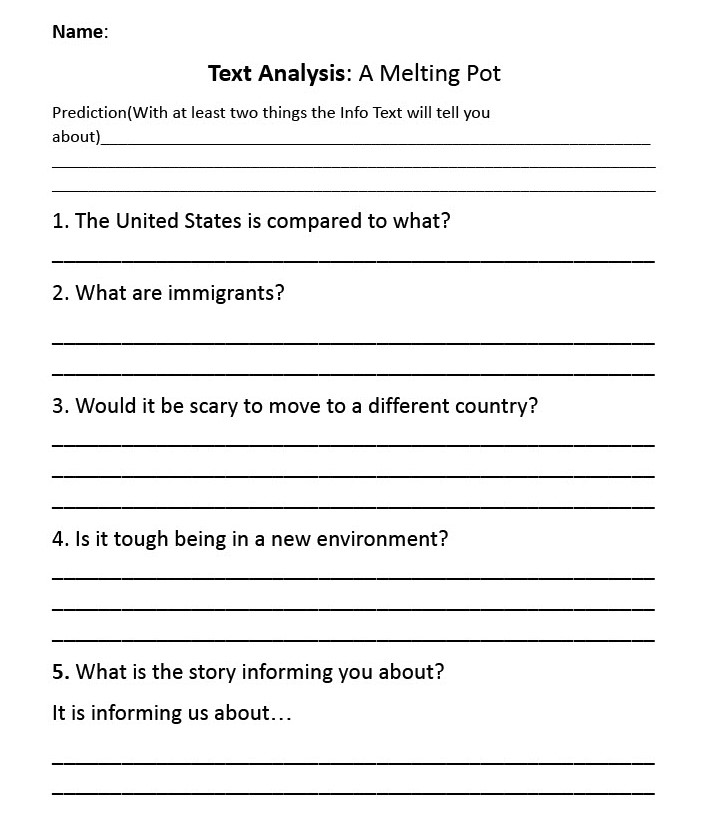
What is Text Analysis? An instructional routine that incorporates the “Big 5” of literacy instruction: Phonological Awareness, Phonics, Fluency, Vocabulary, Comprehension. In addition to those skills, it embeds Writing, as well.

It reinforces and enhances previously taught Reading and Writing skills. If done over the course of two to three weeks, scholars critical thinking skills will grow. The method is broken into three-parts: Before Reading, During Reading, and After Reading. 


Before Reading

  1. Give Background Knowledge: If scholars don’t have a background knowledge of the text you’re about to analyze, give it to them. For example, the text is a Historical Fiction and about the American Revolution. Then I’d show them a quick video on the war. 
  2. Phonological Awareness: Pre-teach the difficult words. Example…
  • Un-com-for-ta-ble
  1. Phonics Focus: Give kids a spelling focus while reading the text. Scholars underline all the words with initial digraphs.
  1. Vocabulary: Intentionally define the Tier 2 or Tier 3 words that students may not know.
  1. Make Prediction: Have scholars make a prediction about what the text will be about with two to three events that may happen.

Duration: 10-15 Minutes


During Reading

A. Initial Reading: Ask for volunteers to read a paragraph. 

B. Phonics Focus(2nd Reading): After a scholar reads a paragraph, have them look for the pattern/sound shared with them in the “Before Reading.”

* This is also another was to embed fluency–as this is a repeated reading.

C. Think-Aloud(3rd Reading): Ask a question about the given paragraph. 

* Scholars will organically start asking these questions of themselves when they read text.

Duration: 30-35 Minutes


After-Reading

Evaluate(Opinion): With the techniques employed(repeated readings, monitor for comprehension, think-alouds), scholars should be able to form a well thought opinion with reasoning.

Synthesize: Scholars will write a personal narrative, expository or persuasive text. 

Example Question: The text was about a fun day at recess. Write about a fun day you had at recess and explain why.

Duration: 45 Minutes


Conclusion: Teaching your scholars to analyze text will help them monitor for comprehension, critically think and begin to form mental images in their mind as they read unfamiliar text. 

Feedback

  1. What questions do you have about “Text Analysis?”
  2. Is “Text Analysis” an effective routine?

Be Phenomenal, Mr. Short

Phenomenal Instruction: Close Reading

What is Close Reading?

Close Reading is a technique that can be used for small or whole group instruction. To conduct the routine, you take a passage and have kids read it multiple times for multiple purposes. The first read is for literal or basic comprehension. The second read is for a deeper dive into higher-level concepts(Ex: Main Idea, Analyze Characters, Inference). The third reading is for evaluating and synthesizing.

*Ideally, small group Closed Reading is better for on or above-level readers. 


How to Conduct Close Reading

Materials Needed: Post-It, Highlighters(Teacher and Student), Document Camera

Resource: Complex Text

For the purposes of this article, I’ll use a poem to model Closed Reading. 

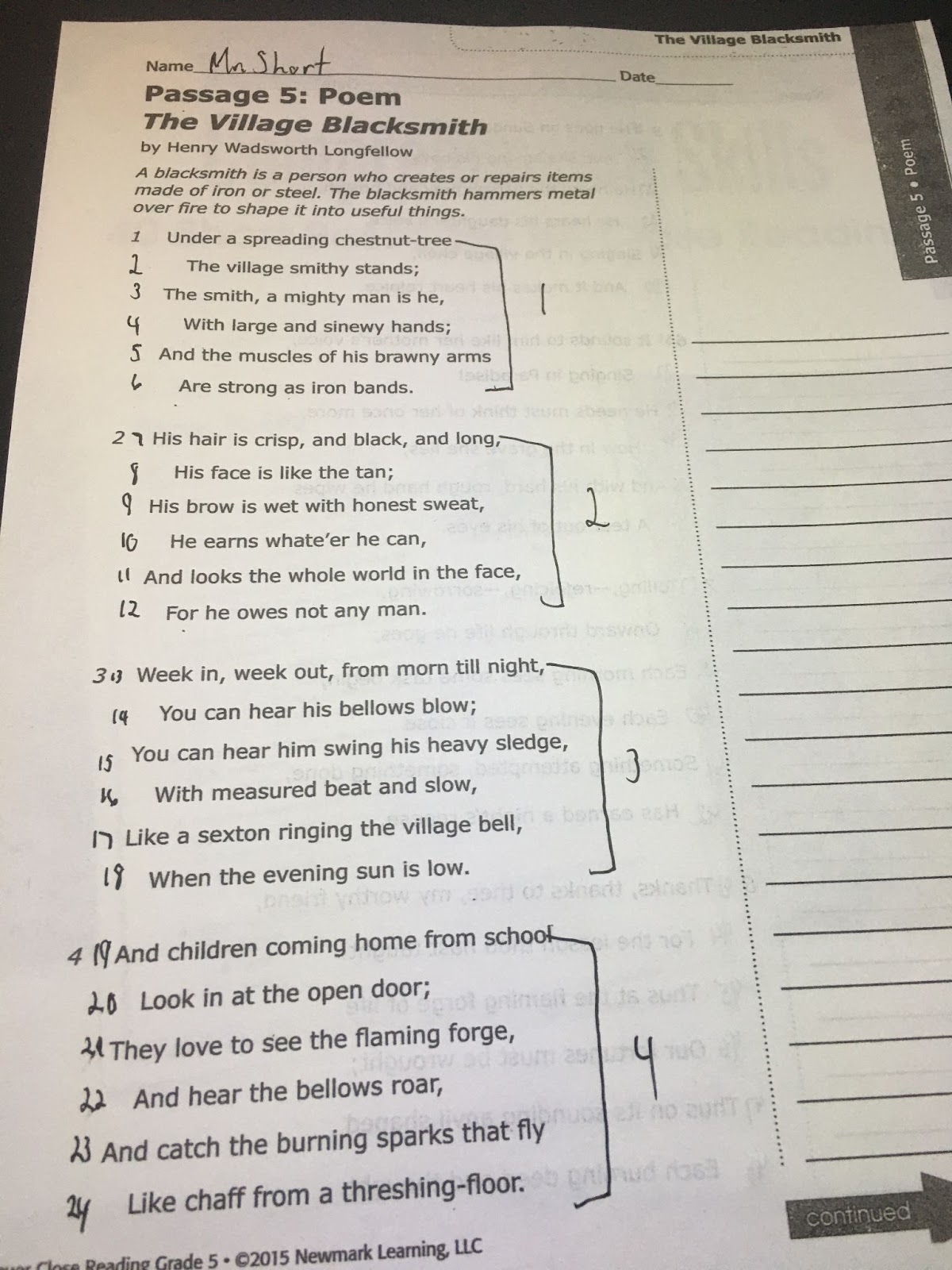
First Read: Number The Lines, Stanzas and Circle Rhyming Words

Before I have students analyze a poem, they number the lines, stanzas and circle rhyming words. The reasoning for this is to slow scholars down, so they’ve already know the gist in preparation for answering the higher-order questions.

*This should take around 5 minutes. 

2nd Read: Deeper Dive

Stanza 1 Question: What is the speaker describing/telling you about in Stanza 1?

This is a good question to determine if the scholars understand the Main Idea of an individual stanza.

Example Answer: The stanza is describing/telling us about the physical characteristics of the Village Blacksmith. My evidence is that the speaker talks about his hands and the muscles in his arms.

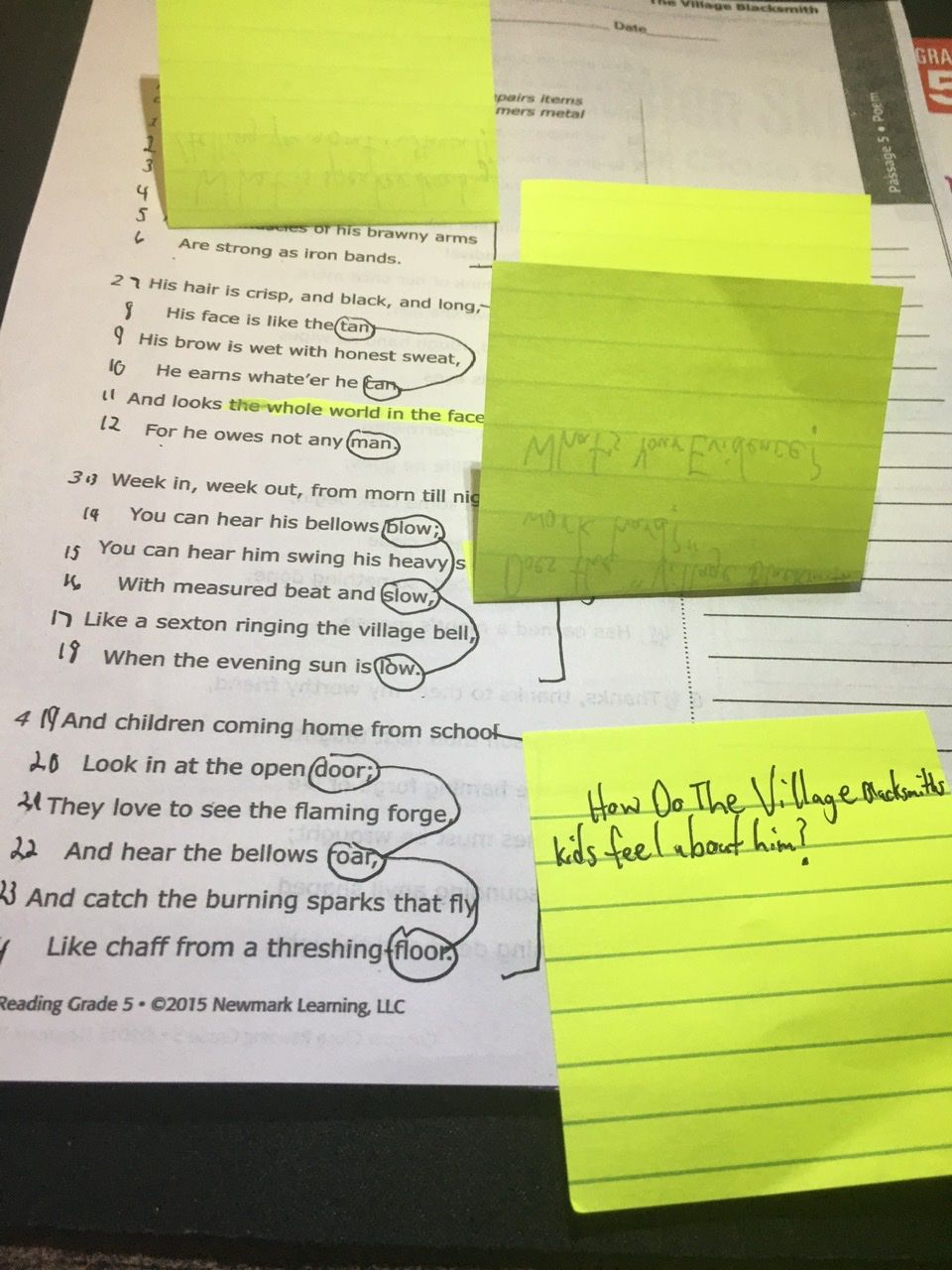
Stanza 2 Question: What does “looks the whole world in the face” mean?

With this question, you get to assess if kids understand figurative language and facilitate a discussion.

Example Answer: Looks the whole world in his face means that he has a serious and mature look to him. 

Stanza 3 Question: Does the Village Blacksmith work hard? If so, what’s your evidence?

This is a good question to further develop scholars ability to analyze and evaluate the text. 

Example Answer: Yes because In the third stanza, the speaker writes “from morn till night.” Hard workers will go all day to complete tasks.

Stanza 4 Question: How does the Village Blacksmith’s kids feel about him?

A good question to see if students can use evidence to interpret Character Feelings.

Example Answer: They love their dad because it says “They love to see the flaming forge.”

Stanza 5 Question: Why does the Village Blacksmith enjoy going to church?

This question requires that the scholars analyze the text deeply.

Example Answer: He enjoys going to church because he likes to hear his daughter’s voice.

Stanza 6 Question: Why does the Village Blacksmith become emotional? 

Again, another question for the scholars to read deeper into the text.

Example Answer: I think he became emotional because his daughter’s voice reminded him of his wife that passed away , and he was reminiscing on past times.

Stanza 7 Question: What is the speaker/author doing in this stanza?

Before the scholars answer the question, ask them to pay attention to each line and word.

Example Answer: The speaker is summarizing the events in the poem up to this point. For example, he/she writes: “Toiling, rejoicing,–sorrowing.”

Stanza 8 Question: Do you think the speaker appreciates the Village Blacksmith?

This question requires that scholars evaluate the final stanza of the poem.

Example Answer: Yes. I think he appreciates the Village Blacksmith because he calls him “my worthy friend.”

Final Read: Divergent Thinking

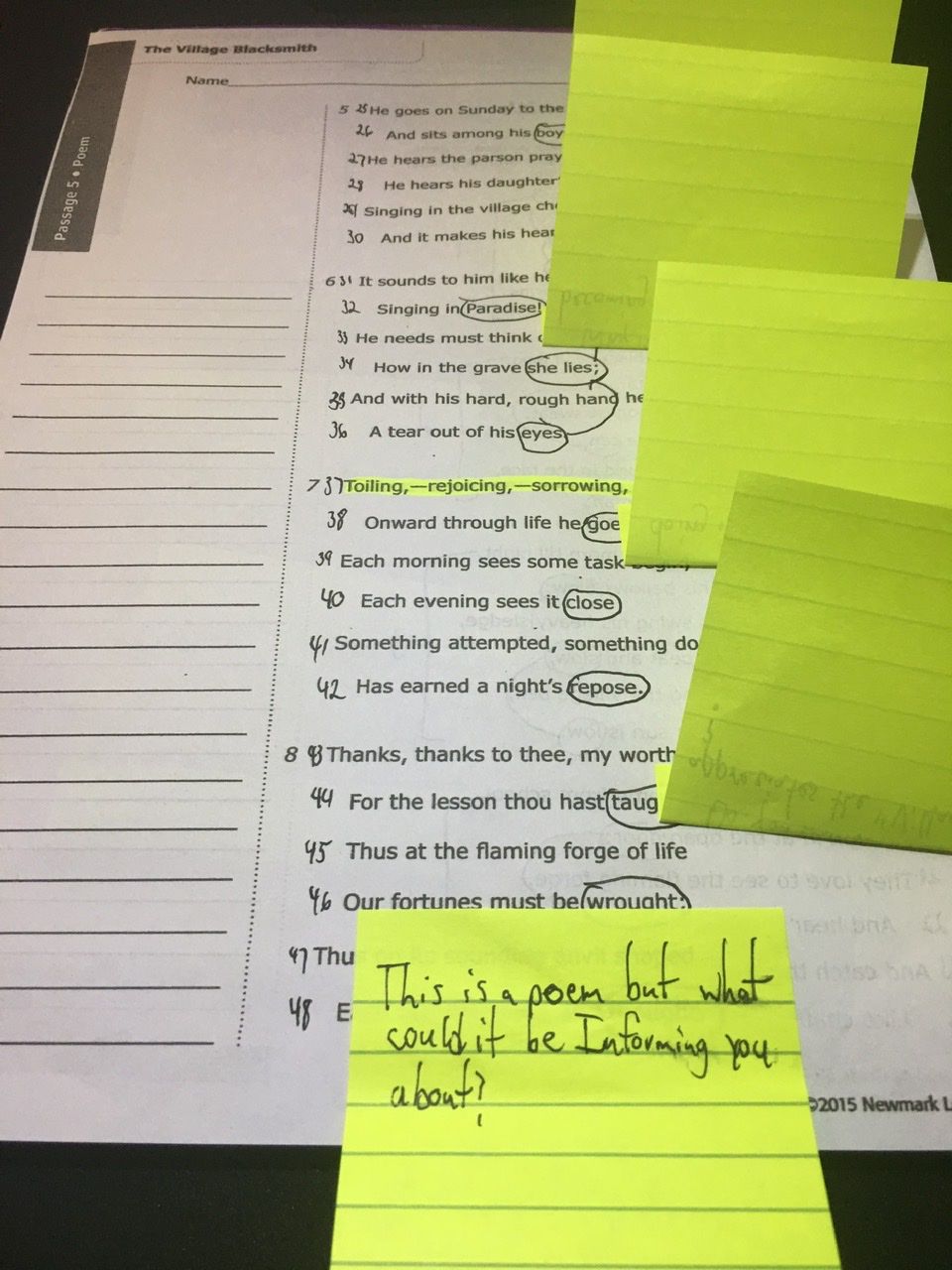
Whole Poem Question: This is a poem, so it’s written to entertain but what other purpose could it serve?

This is a good question to show students that text can be written for multiple purposes.

Example Answer: It could serve the purpose of informing you about the life of a Village Blacksmith during those times.


Benefits of Close Reading

Interactive: While conducting the Close Reading, scholars are constantly doing something. Reading, Talking, Highlighting, Annotating or Writing. 

Scaffolded: It’s a good routine to support weaker readers with comprehension because the teacher is correcting misconceptions and they hear the thoughts of other classmates while having collaborative discussion.

Purposeful: With each Close Reading scholars learn to ask the proper questions as they read text and organically slow down.


Conclusion: Close Reading is a routine that should be a key component of any ELA(English/Language Arts) Instructional Block 2-12(Not proper for K-1). It aids in students monitoring for comprehension and fosters higher-order thinking. 

Be Phenomenal, Mr. Short

Up Next: Text Analysis

Phenomenal Instruction: Targeted Guided Reading

Phenomenal Instruction: Targeted Guided Reading

Resource: Raz Kids or Self-Selected Picture Book

Primary Use: Below-Level Readers

Introduction: Guided Reading is a key part of any literacy block. It doesn’t matter if you follow the “Science of Reading” or “The Reader’s Workshop” model–especially at the Primary Level, which is K-2 for the novices.

As I gained more knowledge about the structure, I developed something that I called “Targeted Guided Reading.”

It’s targeted because scholars learn and reinforce all the skills that they need during the cycle. 


Day 1: Vocabulary

Technique: Vocab Trailers

On this day, neither the students, nor I read the book. I pre-teach key vocabulary words with “Vocab Trailers”, which is a core component of my “Phenomenal Word Power.” Instead of using words based around a pattern or sound, I use Tier 2 or Tier 3 words from the book. 

Here’s an example.

Word: Panic

In this picture…

I supply the kids with the word and stem, then they use it in a sentence. 

To assess mastery, I write whether the child can do so without assistance.


Day 2: Fluency

Technique: Stop At The Punctuation Mark

Building on the kids’ newly acquired vocabulary, I work on their fluency on Day 2. Before having them read the book, though, I teach the students how to sound out(decode) the key words, which embeds that phonics instruction. 

After pre-teaching those words, the kids rotate reading by page. As they read, I note if they’re mastery of the weekly skill, which I’ll say is “Stop At The Punctuation Mark” for the sake of this article. 

While they’re reading, you can do a running record to track how their accuracy, rate, expression and prosody are developing. 


Day 3: Comprehension

Focus Skill: Elements of Plot

Now that the kids have read the book once, you can focus on comprehension. I like to start with the “elements of plot”, which informs understanding of all other fiction concepts. 

To support them in learning that weekly comprehension skill, give them a set of questions. For example…

Setting: What is the setting(location) of the story?

Problem: What is the problem(going wrong) in the story?

Main Events: After you’ve helped them identify the problem, you tell them that the events that follow will help them solve the problem. 

Solution: What is the solution in the story or how did the characters solve the problem? (Kids will usually confuse the climax with the solution. This is your time to correct that misconception.)

To assess, you write if the students were able to identify the setting, problem, main events and solution without assistance. 


Day 4: Assessment

Focus: Quiz

Finishing the cycle, you’ll give the kids a 5 question quiz. I use “Raz Kids” books, so I give them one of their pre-made quizzes. If you don’t have access to that resource, you can write your own questions.

While the below-level readers are taking their quiz, it’s a perfect time to pull the above-level readers for “Closed Reading.”

Conclusion: Targeted Guided Reading is deliberate and specific to what scholars need and incorporates four of the five components of the Science of Reading: phonics, fluency, vocabulary and comprehension. It doesn’t reinvent or recreate the wheel but it does ensure it runs smoother.

Up Next: Phenomenal Instruction(Closed Reading)

Be Phenomenal, Mr. Short

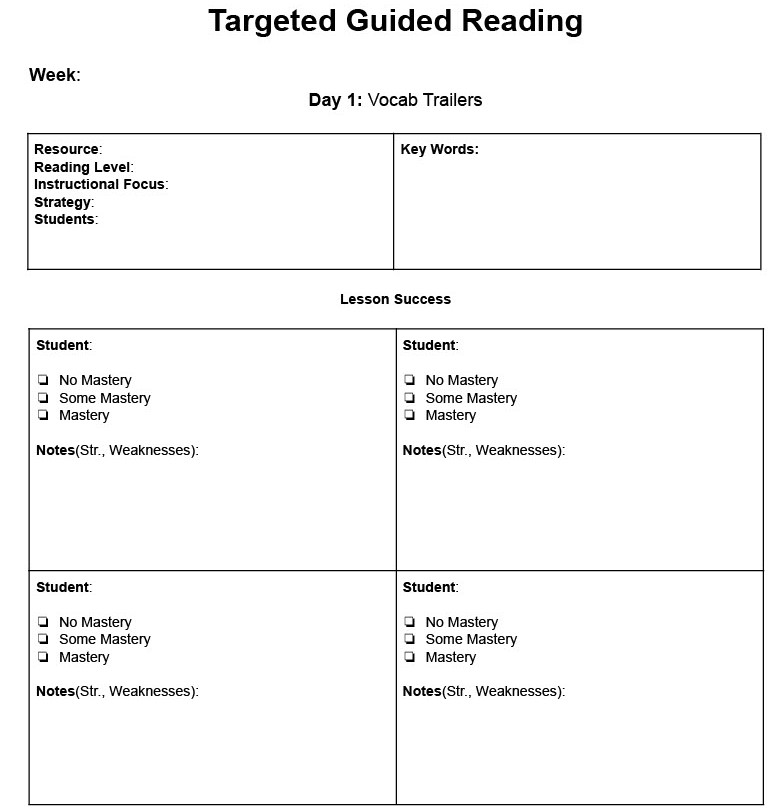
*Attached Below is a sample template.

Testimonial: Davarus Shields, Parent

We are a military family and at the time were living in another country and PCSing back to the US. My daughter who was in 1st grade at the time and only attended school for about 3 months before we came back to the US. Our move happened right when COVID shut everything down then summer break. 

She missed the rest of 1st grade and went straight into 2nd grade. As you can imagine, she was extremely behind as she never learned the building blocks in 1st grade to comprehend the work 2nd grade was giving her. She was making 20s and 30s on her test. So, we decided to get her a tutor to help get her caught up with the rest of the class. It was the best decision we made! 

Jeremiah worked with her virtually 2-3 nights out of the week. His teaching style was very interactive, and she enjoyed learning. He sent us weekly progress reports and different websites we could use to also help her with learning. By the time 2nd grade was over she went from making 20s on her test to making high 80s and 90s. The school was considering holding her back to repeat 2nd grade but Jeremiah was able to get her caught up so she can move on to 3rd grade. 

I highly recommend Jeremiah – the progress he made with our daughter was tremendous in such a short period of time.  

Testimonial: Kerstin Owen, Kindergarten Teacher

I am a kindergarten teacher working in a title one at risk elementary and middle school. Last year, we adopted a new reading program that works well. However, with the student population that I had I was having a hard time getting them to focus and master phonics, reading comprehension and fluency. At my wits end, I contacted Jeremiah Short and asked him for some advice on how to help my students improve on their phonics spelling and reading comprehension and fluency.

Mr. Short and I sat down and he guided me through his Phenomenal Word Power technique. I felt to have this arsenal in my pocket because of the success I had heard he had with it in the classroom.

The next day, I went to school and presented the lesson with my scholars and continued the method each day. At the end of the first week my lower students went from failing their spelling tests to passing and my higher scholars aced their test.

Throughout the school year, I incorporated the program in conjunction with our schools adopted reading program. The results were phenomenal. My scholars showed growth at the end of the year testing in Reading. Out of 12 students, 7 students scored benchmark or above in our schools testing program. The other five students went from well below to below improving their tests score by 20-30 points over all. On their EOY Reading Map test everyone of my scholars went up improving their scores from 7-30 points overall.

This program is proven to work. I can’t wait to start off the year with the Phenomenal Word Power and see the results my scholars will have this year.

Kerstin Owen, Kindergarten Teacher