Phenomenal Instruction: The Literacy Block

Intro: In lieu of my interview with Dr. Kathryn Garforth on my approach to Literacy, I decided to put together a quick breakdown in the form of a Literacy Block.

My Literacy Block

Word Study: Phonological Awareness, Phonics, Vocabulary

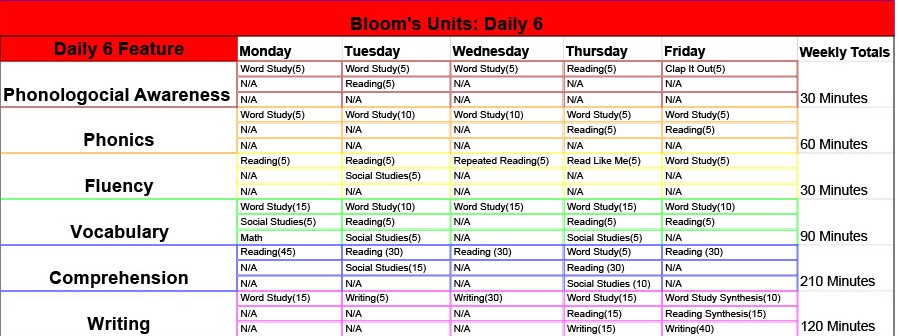
For word study, I used a routine that I call Word Power, which interweaves phonological awareness, phonemic awareness, phonics, vocabulary, oral language practice and writing together to reinforce a weekly sound/pattern. Here’s how I teach Word Study.

  • Follow A Scope and Sequence
  • Interactive Phonological Awareness and Phonics
  • Both Reinforced Through Decodables(Not the primary reading material, though)
  • Speak, Read, and Write with Vocabulary
  • Pre-Teach Academic Vocabulary

Fluency: Embedded and Intentional

Teaching fluency should be on a by student and class component. Some students and classes may need repeated reading. Some may need expression. Some may need to put it all together to have overall good prosody. Here are my tips to teach fluency. 

  • Repeated Reading(Intervention and At-Home)
  • Model Expression 
  • Silly Poems
  • Reader’s Theater

Comprehension: Rigorous But Scaffolded

I’m a huge believer in high-rigor instruction but it has to be appropriately challenging. Students need to learn basic reading skills before they can grasp the more high-level skills. Here’s how I teach comprehension.

  • Explicit, Whole Group Instruction
  • Focus on Metacognition, not anchor charts
  • Structured According To Bloom’s Taxonomy
  • Supply Needed Background Knowledge
  • Reading Is More Than A Book(Real Life Examples, Video-Alouds etc.)
  • Inspire A Love For Reading(Appealing Books, Model Avid Reading)

Writing: Make It Not Boring

I’ll keep it simple. Writing every day doesn’t make you a better writer…it’s boring. If taught properly, kids won’t even realize they’re doing it. Here’s how I do it.

  • Follow A Scope and Sequence
  • Front Load Grammar (First 2 Days of Week)
  • Reinforce Grammar Through Writing(Days 3-5)
  • Write About Reading and in other contents
  • Quality Instruction Over Rote Daily Writing

Conclusion: I’ve never claimed to be an expert on Literacy Instruction but my simple yet efficient approach has and will produce high outcomes for students. 

Be Phenomenal, Mr. Short

A Year In Bloom’s: Word Power

A Year In Bloom’s: Reading

Phenomenal Planning: Don’t Lesson Plan, Lesson Design

Intro: Last week, I wrote about the first stage of Lesson Planning: Mapping A Unit or The Before. 

Today, the focus is the part of planning that is viewed as boring and laborious: Lesson Planning or Doing The Lesson Plans. I get why teachers don’t like the required responsibility. It’s repetitive, takes time, and you’ll change your mind anyway.

Let me reframe your thoughts on lesson planning, though. If you think of the task as you’re designing a lesson, it’ll become a duty you’ll embrace and love.


How To Design A Unit

1. Varied Lesson Intros: A way to design your lessons is to change the way lessons are introduced. Instead of telling students the concept and reviewing a chart, try one of these techniques. 

A. Hook: When I introduce any new concept(no matter the subject), I play a song(if one exists). Why? It’s passive learning and interests the auditory learner. You’ll notice that some kids will think it’s lame but those auditory learners will sing the song throughout the instructional block.

B. Use Real World Connections: We’re living in the Tik Tok/Snapchat generation…If you don’t get kids attention in the first ten seconds, they will move on to a new story. To make sure that they don’t move on, project pictures, play videos and ask questions that are relevant to them. 

C. Interactive Concept Review: Games are your friend if they’re utilized properly. Kids learn without realizing they’re actually learning. That’s teaching at its highest form.

2. Plan Engaging But Rigorous Activities: Activities are what the kids will be doing…so you might as well make them engaging. 

A. Fun Reinforcement: Whenever I reinforcement a grammar skill, the activity is typically fun but meets the standard. Where to find them? I’ll say this in a whisper: Teacher Pay Teachers is a Phenomenal place to look. (Don’t tell your coaches that I said it)

B. Make Them Applicable And Relatable: As adults, don’t we read and watch things in which we enjoy and relate. Kids think the same. Plan activities that will interest them.

C. Incorporate Technology: Several students are 1:1(have their own personal computer) after the pandemic. They’re using technology more than ever. Find ways to incorporate technology in all domains. One caveat, though: Ensure that it’s rigorous and challenging, as well. Otherwise, it’ll be for nought. 

D. Give Projects: Kids–especially GT ones–love projects. They’re fun and give them an opportunity to work with their classmates and/or friends for a common goal. 

3. Mix Up Instruction/Methods: The I(Do) or the Mini-Lesson, We(Do), You(Do) is a popular method of instruction, which is the mode that I favor but that doesn’t mean teachers shouldn’t mix it up. 

A. Video-Alouds: Read-Alouds are a staple of many ELA(English/Language Arts) classrooms but I propose that teachers should conduct Video-Alouds, too. It’s a routine where you play short videos and solicit questions during and after the video has finished. 

B. Class Discussion: Although efforts have been made to change instructional delivery, teachers doing a 10-15 mini-lesson and then asking students to practice the skill is the prevalent way of instructing. 

Engaging in more frequent class discussions of text, math concepts, social studies topics, and science theories will not only capture students attention but improve classroom community. 

C. Flip The Gradual Release: While the gradual release is a good model for teaching, it’s ok to flip or change it from time to time. I understand scaffolding but reversing the gradual release model provides an opportunity to assess what students know. 


Conclusion: I’m cognizant that Lesson Design isn’t as boring as Lesson Planning but requires more leg work. Taking the effect size of Lesson Design(0.70) into account, it’s worth it. 

To simplify: Proper design leads to better student outcomes.

Next Week: Make Sure To After-Plan

Be Phenomenal, Mr. Short

Phenomenal Planning: Mapping A Unit(Before)

In my time as a teacher, the bane of most teacher’s existence is lesson planning. It’s the Sunday evening chore that they’d rather not have. 

To alleviate that stress, I’ve developed a three-part process to lesson planning: Mapping A Unit(Before), Lesson Design, Not Lesson Planning(During), and Lesson Review(After). 

Today, I’m focusing on the Before. 


Three Steps To Mapping A Unit

1. Identify Skills/Standards: The first step to mapping a unit is to know the skills or standards that need to be taught. That could be Order of Operations(Math), Life Cycle(Science), Government(Social Studies), Info Text(Reading), Parts of Speech(Grammar), Opinion(Writing). Understanding the requisite standards, will lead to the next step. 

2. Rigor-Level: Once the standard is identified, determine the rigor for level for that it on the DOK or Bloom’s Taxonomy chart(whatever your school/state utilizes). 

3. Days Needed: Rigor level of standards will determine the days needed. Some concepts may require one day to master…others may take ten days to master. 


Sample Unit: Fiction

To help illustrate what mapping a unit looks like, I’ll share one of my sample units.

Knowledge: Retelling(1 or 2 Days): It wouldn’t hurt(depending on grade-level) to review retelling with students before jumping into a Fiction Unit.

Comprehension: Plot(5 days+2): Before students can master higher-level fictional concepts, they must master the Elements of Plot. It’ll take at least five days for them to become proficient and possibly master the concept. For my method, I increase the rigor by the day as a natural scaffold. 

Day 1: Introduce Elements of Plot

Day 2: Summarize The Plot

Day 3: Make, Revise and Confirm Predictions

Day 4: Analyze Plot

Day 5: Elements of Plot Quiz/Synthesize The Problem

Day 6: Re-Teach Plot and/or Scene Tableau

Day 7: Re-Teach Plot and/or Scene Tableau

Application: Characters (5-8 Days): If students comprehend a story, they can properly analyze characters, which encompasses many sub-skills. 

Day 1: Introduce Character Traits(With a list of terms)

Day 2: Character Traits With Evidence

Day 3: Character Feelings

Day 4: Analyze Character Change

Day 5: Compare/Contrast Characters

Day 6: Analyze Character Relationships

Day 7: Analyze Conflicts Amongst Characters

Day 8: Characters Quiz

You can reduce days if you’re a primary level teacher.

Application/Analyze: Inference(5 Days): Once students can interpret Character Feelings, the cognitive load to infer will decrease. Throughout the five days of explicit teaching of inference, gradually build the rigor.

Day 1: Basic Inference

Day 2: Cause and Effect

Day 3: Drawing Conclusions

Day 4: Most Likely

Day 5: Inference Quiz and Detective Game(Synthesize)

Analyze: Theme/Analyze (5 Days): Mastering all the aforementioned skills make it easier to determine the lesson learned or message in a text. 

Day 1: Identify The Theme of a Text

Day 2: Theme With Evidence

Day 3 and 4: Apply and Infer The Theme(I typically use the same passage/book for this level of rigor)

Day 5: Theme Quiz or…

Evaluate/Synthesize: Fiction (2-3 Days): At this stage, I like to model how to analyze a fictional text with all skills incorporated.

Day 1 or 6: Analyze/Evaluate Fiction

Day 2 or 7: Evaluate Fiction

Day 3 or 8: Fiction Quiz(Evaluate) and Realistic Fiction Book(Synthesize)


Conclusion: Lesson planning is a laborious task but can be made easier if you map the unit and know the end goal.

Next Week: Lesson Design, Not Lesson Plan(During)

Be Phenomenal, Mr. Short

Phenomenal Review: Building Better Writers

Last month, I received an advanced reader copy of “Building Better Writers”  by Natalia Heckman, a Seidlitz Education consultant. In the offering, she provides practical writing instruction to teachers of Emergent Bilingual, ESL, and traditional students. 

I poured through the resource in two weeks…highlighting and making notes. After finishing it, I’d like to provide insight into why you should purchase Building Better Writers. 


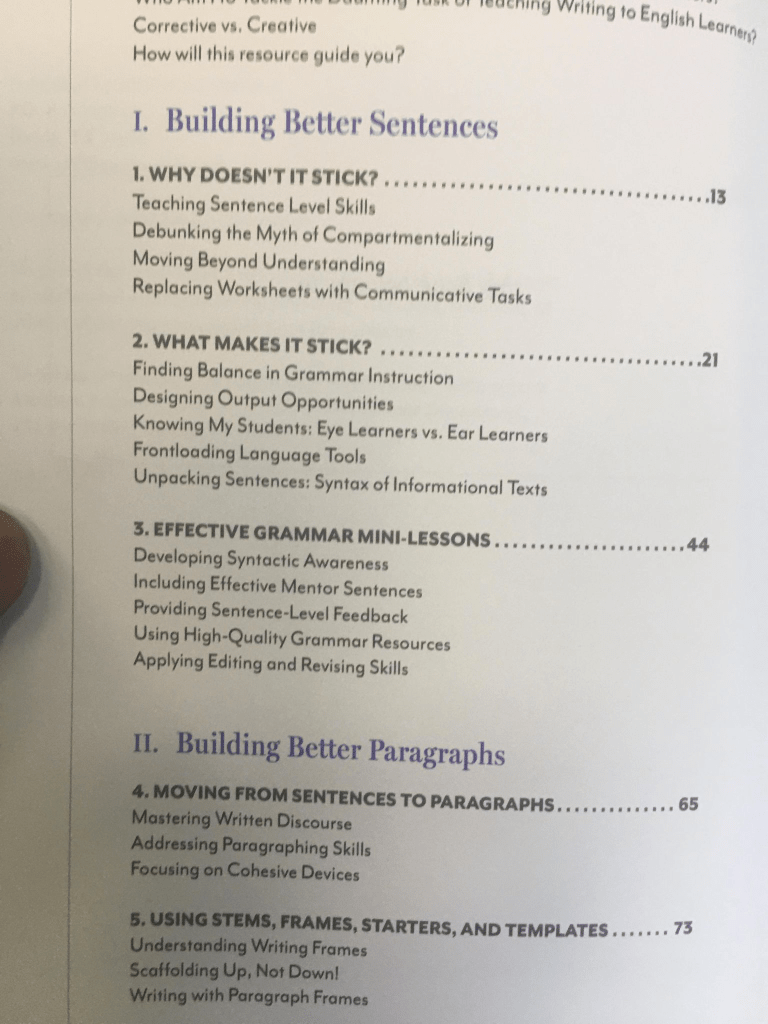
1. Readability: The first thing that struck was the book’s readability. It’s a high-level resource that’s digestible for the novice teacher but practical for the expert teacher. As you can see in the picture above, Heckman clearly diagrams a sentence…explaining the importance of syntax in a sentence.

2. Follows Logical Progression: One of the things that I love about Building Better Writers is the book follows a progression to the writing process from sentence to composition with ideas and strategies to properly teach each component. 

3. Phenomenal Strategies: Building Better Writers is littered with easy-to-use, high-outcome strategies, which will improve any ELA(English/Language Arts) teacher’s instruction and engage students. 

Here are a few.

A. Cohesive Tie Strategy(Pictured Above): Good writers never use the same word twice unless it’s for effect but Heckman’s supplies a sound strategy to teach it to students. 

B. Sentence Live: For this routine, students race to build a sentence using tiles. This strategy fosters collaboration, scaffolds instruction and increases engagement. 

C. Attack The Prompt: With this strategy, students use a three-step process of annotating a writing to determine the purpose for writing. I found this routine particularly timely with Extended Constructed Responses becoming a Texas S.T.A.A.R. (State Assessment) expectation from 3rd-8th grade. 

If you’re a new teacher, one with a few years of experience, or the resolute veteran, Building Better Writers will help you enhance your practice and transform your writing instruction. 

Rating: 10/10(Phenomenal)

Be Phenomenal, Mr. Short

Phenomenal Reflection: “It’s New But I Like It”

Science of Reading vs. Balanced Literacy has caused debate in homes, academic, and social media circles. SOR proponents have lamented the effectiveness of Balanced Literacy. Balanced Literacy advocates have argued that SOR focuses too much on phonics. 

While I’ve never stated a side in the debate, I didn’t realize until recently that I was a Science of Reading(Structured Literacy) teacher my entire career. 

Let me explain my journey. 


2017-2018: The Origins

In the middle of my second year of teaching, my students were doing well on assessments, but for them to achieve mastery, they’d need to improve on smaller TEKS(Standards). To instruct on these skills, I decided to teach them “explicitly” a week at a time. 

The result: 91 percent of my students passed the Reading S.T.A.A.R.(State Assessment). 64 percent were proficient and 25 percent mastered.

In addition to the explicit teaching of skills, I asked my students to engage in Repeated Reading(Fluency) throughout the year. Fluency was embedded in my instructional block, as well. My students actually led choral reading routines. Unbeknownst to me, fluency is a core part of a proper literacy block. 


2018-2020: The First Criticism

Building on my second year, I kept with the same practices–Fluency and Explicit teaching. That approach again yielded high outcomes…83.4 percent of my students met their MOY(Middle of the Year) MAP Growth measure. 

Around the same time, I received my first criticism. In a meeting, I was told: “You need to do more groups.”

Me: “I have the best scores on the grade-level”

Admin: “We’re not talking about data.”

3rd year Mr. Short was confused. 7th year Mr. Short empowered with the knowledge of the various methods of teaching reading understands that they were Balanced Literacy proponents. (We used The Units of Study.)

The next year, I taught 2nd grade and evolved my literacy practices…incorporating all components of that the National Reading Panel outlined for a functional Literacy Block. 

The Components

  • Word Power(Explicit Phonological Awareness, Phonics, Vocabulary Instruction)
  • Repeated Reading and Choral Reading(Fluency)
  • Intentional Read-Alouds, Explicit Skill Teaching, Writing About Reading(Comprehension)
  • Showing Videos Before Reading Passages(Background Knowledge)

Adding to that, I created an intervention structure(T.I.D. E.)built around screening kids for decoding, spelling, vocabulary, fluency, comprehension and then intervening, developing or enhancing them. (All the articles are on my website.)

By the end of the year, half of my students read above grade-level. Two read a Level T(5th Grade). According to MAP Growth, they grew 2.0 years in Reading and 2.4 years in Vocabulary.

Even with the accelerated growth, I was told: “You’re engaging in bad practice.”


2020-2021: Coronavirus and Discovering Myself

After that experience, I didn’t teach most of this year but spent time researching and recovering. It was during this time that I grew to understand why I faced so much opposition…I was a Structured Literacy teacher working in a Balanced Literacy environment. 

Eventually, I got back to the business of educating…tutoring and simultaneously experimenting with a structured literacy intervention method. The student(a 2nd grader) who I tutored went from a non-reader to excelling as a reader in five months. She’s still doing well.


2021-2023: Fully-Formed Structured Literacy Teacher

At the beginning of the 2021-2022, I accepted a Reading Interventionist position(although I taught as well the first semester).

Utilizing a structured literacy approach, my intervention students grew exponentially…2.0 years on average. Several students grew six and seven levels. That’s in only 20 weeks of intervention. 

Following that school year, I created a resource: Phenomenal Intervention(The Playbook). 

During the middle of the next year, I presented my method for the first time at Lit Con 23(The National K-8 Literacy and Reading Recovery Conference). Showcasing a Structured Literacy approach at a Balanced Literacy conference was nerve wracking but I received a tremendous response. 

Attendees raved about my presentation. One group of people went so far as to say they’d fly me out to present to their district. They’re doing so and I’ll present on May 26th. 

A comment from my presentation sums my structured literacy journey up best: “It’s new but I like it.”

I’m a Structured Literacy teacher and proud of it.

Be Phenomenal, Mr. Short

Enhancing Learning with Video-Alouds: Accessible and Engaging Lessons for All Students

A couple of weeks ago, I released a #TalkingThursday: Be Intentional About Your Read-Aloud. 

While read-alouds are an effective tool to introduce or review skills, a video-aloud is an effective option, as well.

You may ask: What’s a video-aloud? Video-Alouds consist of playing a commercial, YouTube, Live-Action, Pixar or Disney clip for your students. Throughout the course of this routine, you can engage in think-alouds, ask students to respond in writing, and foster critical thinking.

There are several other benefits, too.

  •  Content Differentiation: Students receive information in a different way than normal.
  •  Increases Engagement: Using cartoons and live-action clips sparks the interest of students
  •  Accessible To All Students: Whether a student is below, on, or above-level, they can access the lesson and learn the skill.

Here are a few examples as to what it looks like. 


Summary: Soar

Mini-Lesson: To introduce a summary, I go over a B.M.E.(Beginning, Middle, End) anchor chart…explaining that the beginning is the setting/problem, middle is the events(or steps to solve the problem), and the end is the solution and resolution. 

After introducing the concept, I play Soar. Then I model how to find the summary of the short film. 

Beginning: A young girl is on a farm when a small boy crashes his plane and gets lost from his family. 

Middle: To fix the plane, the girl tapes sticks together. That doesn’t work so she puts a parachute on it. With a little boost, the boy begins to fly again.

End: At the end, the plane is fixed and the small boy rejoins his family. As a thank you to the girl, the little boy lights a star.

Following the modeled instruction, I release students to practice summary with a partner and then independently.


Character Change: The Selfish Giant

Mini-Lesson: Before playing “The Selfish Giant”, I tell students to pay attention to the character’s traits at the beginning and the end. Think about why he changed. 

Modeled Instruction: Once the video concludes, I model how to analyze the character change in the story. 

Beginning: Selfish

End: Caring, Loving

Why did the giant change? He realized that the kids were important to the garden.

Following this, students practice character change with a partner and then independently.


Author’s Purpose(Explain): How To Floss

Mini-Lesson: Explaining Author’s Purpose comes on the 2nd day of my Author’s Purpose Unit. So, I review the terms and then guide students through several pictures and video clips. One of those clips is “How To Floss.”

We(Do) or You(Do): While watching the video, students do “The Floss” dance. After it’s over, I ask them to determine the Author’s Purpose, which is Explain. 

Conclusion: Utilizing video-alouds, instead of read-alouds is a mindset shift but it meets students at their level, not ours.

Conduct a Video-Aloud.

Be Phenomenal, Mr. Short

Phenomenal Instruction: Don’t Teach In Isolation

Last week, I wrote about Teaching With Backwards Design, which was a piece of advice given to me by a friend and fellow educator, Khaleel Lott, during the 2017-2018 school year. Another comment from him resonated with me that year, as well: “I don’t teach anything in isolation.”

The words ring true because you can’t teach any standard/skill without taking others into consideration–especially if proficiency on State Test is the goal. 

Admittedly, I taught set skills early in my career without knowing how they interrelated. All I knew was Main Idea is “four questions” on the S.T.A.A.R.(Texas State Test) and Theme was “two questions.”

I didn’t realize how students needed to know several skills before mastering others. I’ll provide a few examples.

Theme

To master Theme or Lesson Learned, students need to master…

  • Vocabulary
  • Elements of Plot
  • Analyze Characters
  • Inference

Why are these skills important? If you can’t comprehend a story, you can’t tell me the message. If you can’t interpret how the character changed, then you won’t get the message. If you can’t infer from details, then you won’t get the message. If you lack the vocabulary, you won’t be able to properly express the Theme. 


Author’s Purpose

To master Author’s Purpose, students need to master…

  • Vocabulary
  • Key Details
  • Main Idea
  • Text Features

Why are these skills important? Before you can determine an article or story’s purpose, you have to find the key details. Before you can determine the purpose, you have to know its Main Idea. Before you determine the purpose, you have to know how the Text Features support it. Again, you the vocabulary-Tier 2 and 3–to properly articulate the Author’s Purpose. (Many times on State Test synonyms are used for Author’s Purpose terms.)


 Literary Non-Fiction

To master Literary Non-Fiction(Biographies and Autobiographies), students need to master…

  • Analyze Characters
  • Theme
  • Main Idea
  • Point of View
  • Author’s Purpose
  • Poetry

Why are these skills important to Literary Non-Fiction? 

Those are a litany of concepts, but Literary Non-Fiction uses fictional and non-fictional components. Instead of analyzing a fictional animal, you’re analyzing a real human. Instead of identifying the moral of a fable, you’re identifying the moral of a real person’s life. 

Adding to that, Point of View and Poetry elements are embedded within the genre, as well. Of course, you have to determine the Author’s Purpose of Biographies or Autobiographies.

Critical Reading Teacher: That’s why you spiral.

Me: True, but you can’t spiral what you haven’t explicitly taught yet. When you do teach it, makes sure kids master it because you “Don’t Teach In Isolation.”

Be Phenomenal, Mr. Short

Phenomenal Instruction: Teach With Backwards Design

Khaleel Lott, a co-worker and friend, bellowed to me(a 2nd-year teacher): Short, you’re good at teaching with Backwards Design.

Me(In My Head): What the heck is Backwards Design? 

In the years since, I’ve learned that it’s planning lessons with the goal of reaching a desired objective. 

For example, let’s take this TEK(Texas Based Standard): 3.8(C) analyze plot elements, including the sequence of events, the conflict, and the resolution ®. 

R stands for readiness standard in Texas, so that means it’s tested on the S.T.A.A.R.(Texas State Assessment). Making sure that students master the skill is vital for them to achieve success. 

Here’s how you’d teach it with Backwards Design.

Analyze Plot

Day 1: I can identify the problem and solution in a text. 

While conducting a read-aloud, the teacher guides students through identifying the problem, events and solution in a text. After guiding them through that process, they practice with a partner and then independently. 

Day 2: I can summarize the plot of a story. 

For this lesson, introduce Summary with a song and BME(Beginning, Middle, End) anchor chart. 

Then model finding the summary with the students. Students will work with a partner to find the summary. To close the lesson, students will independently find the summary. 

Day 3: I can make a prediction about a text using multimodal approaches. 

Differentiating, guide students through a Google Slide where they will apply their knowledge of elements of plot to make predictions about what the book or movie will be about. 

Day 4: I can analyze the plot for sequence, problem, events and solution. 

All the scaffolding builds towards this day in the unit. The teacher will read a text with scholars and ask questions which require the students to analyze and write a response. 

Sample questions.

1. Why is paragraph 2 important to the text?

2. What event led to the problem being solved?

3. How was a secondary character important to resolving the conflict?

With this method of instruction, students write about reading while allowing the teacher to determine mastery of the standard. 

Day 5: I can demonstrate mastery and synthesize the elements of plot.

To end the unit, students are assessed with a five to ten question quiz. Also, they’re asked to synthesize the text by answering a question-such as: How would you have solved the problem?


Writing

In Texas, teaching with backwards design in Writing has heightened importance–as students are assessed for Reading and Writing(3rd-8th grade). 

A simple lesson progression alleviates the stress of helping students master the Writing standards.

Days 1 and 2: Front Load Grammar

On these days, teachers should front load grammar to ensure they become proficient in the conventions.

Day 3: Apply Grammar Conventions

Students apply their grammar knowledge by writing a draft–whether they’re responding to a text or penning a typical composition. 

Day 4: Revise and Edit Drafts

Teachers will instruct on revising or editing a draft with the previously taught skill. Students will confer with peers to revise and edit their rough draft from the day before. 

Day 5: Assess On Skill or Compose Final Draft 

To conclude a writing unit, the teacher should assess the weekly skill and ask students to compose a final draft with corrections. 

In addition to teaching the concepts, teachers have other considerations, as well.

1. Students must become proficient at keyboarding. (State Tests in Texas are on a computer.)

2. Teach students the new question types. 

Meeting state standards is difficult and taxing but with sound planning…It can happen.

Begin With the end in mind by Teaching With Backwards Design. 

Be Phenomenal, Mr. Short

#FlashbackFriday: The Greatness Talk

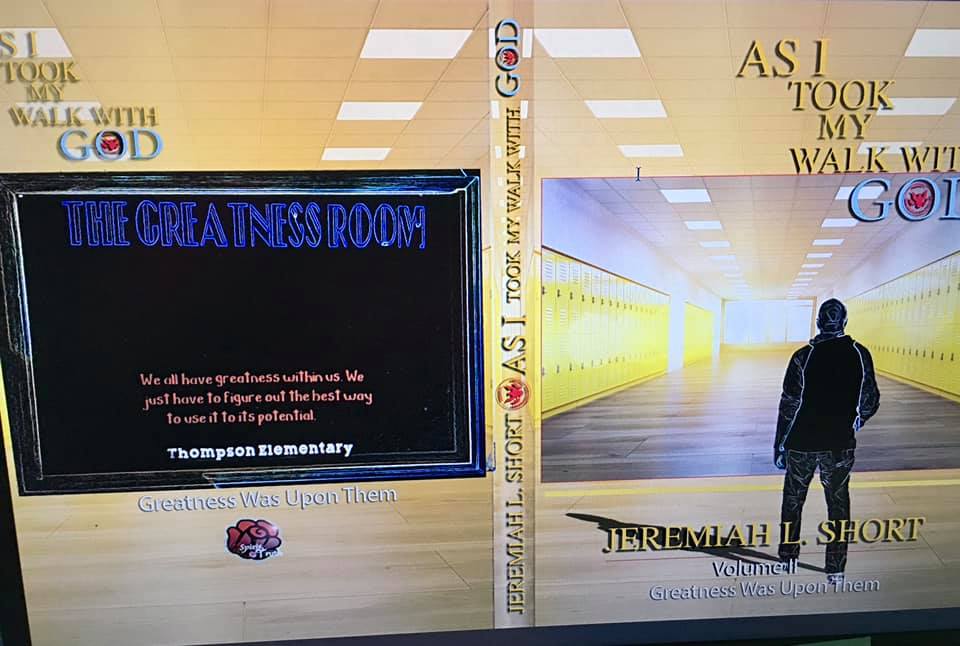
An anecdote from As I Took My Walk With God II: Greatness Was Upon Them

The Greatness Talk

Place: Greatness Room, Late In 2016-2017 School Year

Intro: Do Your Part

Opening the talk, I let the kids know that 16 of them would have passed the Math Benchmark if they had correctly bubbled in their fill-in-the-blank questions. That’s 76 percent.

I didn’t stop there.

One student made a 40 and didn’t even study. 

Me to Him: Would you have done better if you studied?

Him: Yes (Nodding his head)

There was another student who made a 45. He didn’t study, either, claiming that his phone didn’t work. (I know, the classic dog-ate-my-homework excuse.)

Me To Him: “Your notebook doesn’t work? I know we’ve had checkpoints, and you’ve left your math notebook on your desk. You even left your Writing STAAR binder on your desk before Spring Break.”


1st Principle: The Benchmark

After that, I transitioned to talking about the Reading Benchmark by thanking the kids for doing what I asked: putting a smile on Ms. Dixon’s face. She was happy with their improvement. And that’s saying a lot. She holds the same high standard that I do.

You’ve improved but 61.9 percent isn’t good enough. That means 38.1 percent of you failed. I don’t accept that.

No more writing stories or reading picture books for “When I’m Done” time. You need to read. Not comic books or magazines but chapter books.


2nd Principle: Friends Help Each Other

The conversation shifted to friends. I focused on two students. The students always bring up the fact that they go on playdates and hang out on weekends.

One is a strong speller but struggles with reading comprehension. The other does well with reading comprehension but isn’t a strong speller.

I asked: Why don’t y’all help each other? That’s what real friends do.

Then I highlighted two other students who facetime all the time but don’t have anyone at home to study with them.

Me: “Why don’t y’all Facetime and help each other study?”

At that point, I had a message for the kids who were upset that they failed the test.

Me: If you failed, why are you playing at recess? It’s ok to play for about ten minutes. The rest of the time you need to be reading or studying your vocabulary words.


Final Principle: It’s A Small Word

With all the talk about losing, I decided to share some more of my backstory with the kids. I told them that I worked security, but it wasn’t very secure. It’s a job that I quit after my last assignment. The decision wasn’t an easy one. I dealt with opposition from my family. I was told that I was lazy and didn’t want to work.

Also, I lived by myself and had bills. I couldn’t pay those or rent. Eventually, I was evicted. That all led to a point where I was homeless for a day. It was one of the worst feelings of my life. But I wasn’t just homeless because I didn’t have anywhere to stay. I had a bad relationship with my sister at the time. So, I couldn’t stay with her.

It was a tough situation but I vowed: “Never Again.”

I did get a job. Lost it. I kept on pushing, though. Then I got hired in education. Now, I’m here, and I know that I was meant to be here.

Why? I found out that a person, whom I struck up a friendship with at my last assignment as a security guard, is good friends and college classmates with one of their classmate’s dad.

Of course, they wondered which classmate. So, I told them.

One student opined: Small World.

I let them know that she has improved more than anybody.


Closing: Get Tired of Losing

At that moment, I got emotional. I didn’t cry, but I almost did.

Gathering myself, I kept with the talk on losing. I told them about my development as a writer. I started from the beginning. I was in Basic English my first year in college, because I didn’t score high enough on a college-entrance test(A.C.T.).

Even as a college student, I still struggled. I would get a 100 for content and get marked down for grammar and punctuation. The same stuff they struggled with, but I was grown. 

They’re in the 4th grade.

I struggled some more as I became a writer professionally. People clowned on me for my grammar…publicly.

Once people did that enough, I decided I was tired of losing. So, when my articles were published, I’d print out the edited version and compare it to my rough draft–identifying my grammatical errors.

Gradually, my grammar and punctuation improved. I wanted to take it to the next level, though.

I sent my articles to national writers. They gave me critiques, which took my writing to another level.

Focusing on the Benchmarks again, I brought up the theme of the week: “Don’t Worry About They.”

Whatever you make on the Benchmark, then that’s what you’ll make on the STAAR.

Students started grumbling…

Deadpanning: Who Is They? I don’t care about They. They don’t matter. We’re The Greatness Room. We’re Great.”

Chants are all good and stuff. But I don’t want you to talk about being Great. I wanted you to shh(finger on lips)…show me.

The speech was long (30 or more minutes) but necessary. I wanted my babies to understand Greatness and what it takes to reach it.


Epilogue: They Reached Greatness

Throughout the day, the kids displayed a different level of focus.

For example, as I reviewed vocabulary words and worked through a reading passage, they were energetic and engaged. 

I loved it.

Another example: Before the math lesson (Converting Measurements), I challenged the kids. I wanted 100 percent on the exit ticket.

What percentage of them got the exit ticket correct? 100 percent(Phenomenal).

Shortly after this speech, they reached greatness, and I fulfilled my promise to show them what Phenomenal looked like and turned my room into The Phenomenal Room. 

Be Phenomenal, Mr. Short

Phenomenal Instruction: Add A Student(Do)

Traditionally, the gradual release follows this structure: I(Do), We(Do), You(Do). It’s a simple but efficient method to teach multiple subjects. A few years ago, I added an additional component to the model: Student(Do). 

What is a Student(Do)? It’s where a peer, after initial instruction, models how to answer the question or correct a sentence. To illustrate, I’ll share a sample lesson for Common and Proper Nouns. 

Intro To Common/Proper Nouns

I(Do): 10-12 Minutes

Hook: Common/Proper Noun Song(3-5 Minutes)

To begin the lesson, play a common/proper noun song. It’s great to engage and tap into students with auditory learning styles. Some will think it’s corny…others will sing along.

Intro: Common/Proper Noun Anchor Chart (3-5 minutes)

After catching students attention, project a common/proper noun anchor chart and then introduce the concept. It’s a good idea to have students read the information instead of you to ensure 100 percent participation. (Kids will listen to their peers better than you.)

Model: 1-3 Common/Proper Noun Sentences(3-5 Minutes)

Model identifying if the underlined noun is a common or proper noun. (Give evidence as to why)

Then read the next two sentences aloud and ask them what the underline word is: common or proper. Once you complete this step, you’re ready for the Student(Do).


The Student(Do): 3-5 Minutes

Modeling(Student-Led): 3-5 Sentences

Allow student volunteers to come and model how to identify if the underlined word is common or proper. Make sure that they share they’re evidence to support their answer. This is a Phenomenal time to assess mastery of initial instruction. Even if students are demonstrating for peers, you’re there to clear up any misconceptions.


We(Do): 5-10 Minutes

Guided Practice: Reveal and Answer

Following the Student(Do), you’re ready to move into guided practice. Read out the sentence and ask students to identify if the underlined word is common or proper. Normally, I give students a time limit and decrease as the guided portion of the lesson progresses. 

When it’s time for them to answer, say: Reveal!!! (I typically do voices.)


You(Do): 10-12 Minutes

Independent Practice(Review): One Sentence

One way to make sure that there aren’t any misconceptions is to conduct a You(Do) review is to identify a word in a sentence as common or proper. If 80 percent or more students are correct, move forward. If not, then re-teach or clear up any misunderstandings.

Independent Practice: 4-5 sentences

Have scholars complete 4-5 and identify the underlined word is common or proper. 

Letting students review the final sentences or questions with their classmates is an excellent way to build leaders and increase engagement. (Also, a way to see how students view you as a teacher)

Close out the lesson with an exit ticket to ascertain final mastery.

Utilizing a Student(Do) isn’t an innovative but easy way to foster classroom community and make school inclusive experience.

Be Phenomenal, Mr. Short

Jeremiah Short is a seventh-year teacher who is the author of Phenomenal Intervention: The Playbook and host of The Phenomenal Student Podcast.